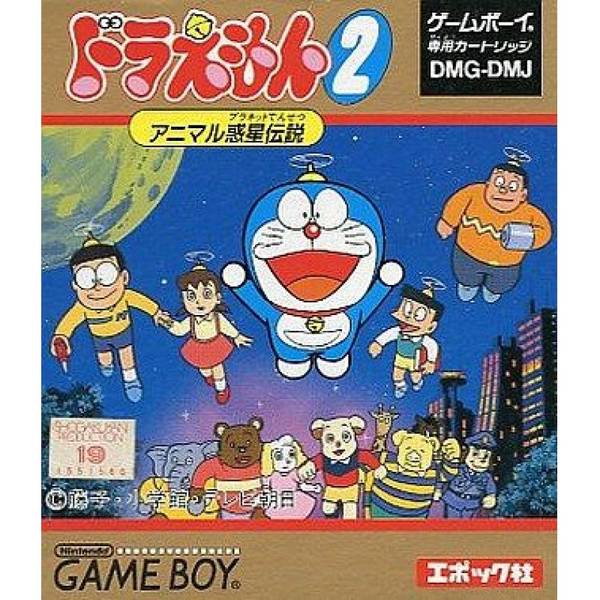
哆啦A夢 2:大雄與光之神殿
 1998-12-11
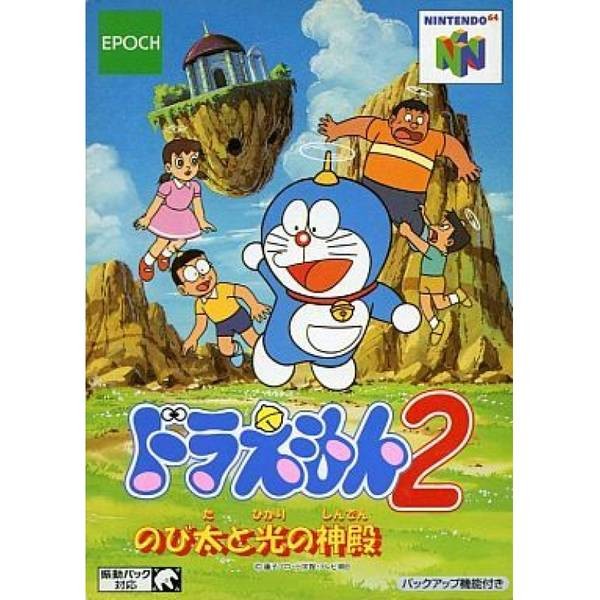
《哆啦A夢 2:大雄與光之神殿》(ドラえもん2 のび太と光の神殿)於 1998 12月11日在Nintendo 64推出,是由Epoch公司開發與發行的3D動作冒險遊戲。作為N64平台《哆啦A夢》系列的第二部作品,在初代單純動作闖關的基礎上,顯著強化「冒險」與「RPG」元素。遊戲擁有更寬廣的可探索地圖,並引入創新的時間流逝系統與角色情感參數,使其成為N64玩家心中深具氛圍感與遊戲深度的動漫改編佳作。
在開發上明顯汲取《薩爾達傳說:時之笛》等當代大作的靈感,將遊戲舞台設計為充滿異國風情的原始世界。採用全3D場景建模,並包含豐富的過場對話與角色動態。核心特色之一是「即時時間與星期系統」:遊戲內時間持續流動,晝夜更替不僅影響視覺效果,也會改變村莊中NPC的行動與對話。還引入「心情參數」系統,五位主角(哆啦A夢、大雄、靜香、胖虎、小夫)的心情會隨冒險進程波動,進而影響戰鬥表現與對話內容,這在當時針對兒童的遊戲中屬罕見的高級設計。
故事背景設定在一個神秘異世界,存在三個不同種族(阿巴克族、布拉尼族、博加納族)。大雄一行人意外來到這個世界,發現能源平衡正受到威脅,必須尋找失散的「光之水晶」並前往傳說中的「光之神殿」才能解決危機。劇情不僅是單純的尋寶冒險,還深入描繪三個種族之間的文化差異與矛盾,以及大雄等人如何透過勇氣與友情化解誤會。整體氛圍較電視版略顯嚴肅,帶有懷舊且神秘的長篇冒險感,讓玩家彷彿置身於一部原創的哆啦A夢電影之中。
在操作設計上,融合平台跳躍、動作戰鬥與道具解謎,手感比初代更加紮實流暢。可隨時切換五位主角,每位角色擁有微小能力差異(如胖虎力量大、靜香跳得高),部分機關或對話必須使用特定角色才能觸發,強調「團隊合作」的重要性。遊戲收錄超過 60 種祕密道具,包括戰鬥用的空氣砲、休克槍,以及功能性道具如「竹蜻蜓」跨越地形與「露營膠囊」在寒夜中過夜。夜晚氣溫驟降會消耗體力,需妥善規劃冒險時間與道具使用。此外,遺跡關卡中充滿複雜的3D平台挑戰與機械兵器,玩家需靈活運用第一人稱瞄準模式射擊開關,或利用特定道具解開古文明魔法門。
在市場上獲得相當不錯的評價,被認為是N64三部曲中最具平衡性的一作。評論家讚賞遊戲的環境營造,特別是黃昏與夜晚交替時那種寂寥而神秘的氛圍,極具沉浸感。RPG元素的加入大幅提升耐玩度,玩家在村莊收集情報、在遺跡探險的循環過程中充滿成就感。對哆啦A夢粉絲而言,角色性格還原與原創故事完成度都達到極高水準。
市場普遍認為,雖然受限於N64硬體,部分遠景會有霧化現象,夜晚氣溫降低導致體力扣減的機制對年幼玩家略具挑戰,但整體「冒險感」遠超同類動漫遊戲。遊戲成功將哆啦A夢的趣味性與3D動作冒險深度結合,至今仍被許多復古玩家視為 N64 平台上最值得一試的動漫改編遊戲之一。
Doraemon 2: Nobita and the Temple of the Sun (ドラえもん2 のび太と光の神殿), released on December 11, 1998, for the Nintendo 64, is a 3D action-adventure game developed and published by Epoch. As the second entry in the Doraemon series on the N64, it expanded significantly upon the purely action-oriented gameplay of the first title, emphasizing adventure and RPG elements. The game featured a much larger explorable world, introduced an innovative time progression system, and implemented character mood parameters, making it one of the most immersive and richly detailed anime adaptations for the N64.
The development of Doraemon 2 drew clear inspiration from contemporary hits like The Legend of Zelda: Ocarina of Time, setting the game in a vividly detailed, exotic world. It employed full 3D modeling for all environments, along with extensive cutscenes and character animations. One of its signature systems was the real-time day-and-week cycle: time continuously advanced, with day-to-night transitions affecting not only the visuals but also the actions and dialogues of NPCs in villages. Additionally, the “mood parameter” system tracked the emotional state of the five main characters (Doraemon, Nobita, Shizuka, Gian, and Suneo), influencing both their combat performance and dialogue. This level of depth was rare in games targeted at children at the time.
The story is set in a mysterious alternate world inhabited by three different races: the Abak, Brani, and Bogana. Nobita and his friends accidentally arrive in this world and discover that its energy balance is in jeopardy. To prevent disaster, they must locate the scattered “Crystals of Light” and reach the legendary “Temple of Light.” The narrative goes beyond a simple treasure hunt, exploring cultural differences and conflicts among the three races, and how Nobita and his friends overcome misunderstandings through courage and friendship. The overall tone is slightly more serious than the TV series, evoking a nostalgic and mysterious epic-adventure atmosphere, immersing players as if they were part of an original Doraemon movie.
Gameplay combines platforming, combat, and item-based puzzles, providing more polished and responsive controls than the original title. Players can switch freely between the five main characters, each with slightly different abilities—Gian is strong, Shizuka can jump higher—and certain mechanisms or dialogues require specific characters to activate, emphasizing teamwork. The game includes over 60 secret items, such as the Air Cannon and Shock Gun for combat, as well as functional tools like the Bamboo Copter for traversing terrain and the Camping Capsule for surviving cold nights. Nighttime temperature drops reduce stamina, requiring careful planning of exploration and item use. The ruins stages feature complex 3D platforming and mechanical enemies, demanding precise first-person aiming or the clever use of items to unlock ancient magical doors.
Doraemon 2: Nobita and the Temple of the Sun received strong praise upon release, widely regarded as the most balanced entry in the N64 Doraemon trilogy. Critics highlighted the game’s environmental design, particularly the lonely yet mysterious atmosphere of twilight and nighttime, which added a high level of immersion. The RPG elements greatly enhanced replayability, as players gathered information in villages and explored ruins in a satisfying cycle of adventure. For fans of Doraemon, the faithful character portrayals and original story achieved a high level of quality.
While the N64’s hardware limitations caused some distant scenery to appear foggy and the stamina reduction mechanic at night could be challenging for younger players, the overall sense of adventure far exceeded that of other anime-based games of the era. The game successfully combined Doraemon’s charm with deep 3D action-adventure mechanics, and it remains regarded by retro gamers as one of the must-play anime adaptations on the N64.
運費計算方式:
貨款滿1000元運費外加90元
貨款1000以下:買1件運費外加 60元,買2件運費外加 70元,
買3件運費外加 80元 ,買4件運費外加 90元
貨到付款外加30元手續費
外島及大陸地區運費另計
付款方式:
線上刷卡:本站採用Paypal線上刷卡
虛擬帳號匯款:屬於您專屬的虛擬帳戶,方便站長查帳使用,本站強力推薦
實體ATM匯款:請將匯款帳號記錄下來至各大銀行ATM提款機轉帳
超商條碼繳費:請列印本站提供的條碼至四大超商繳費
線上轉帳:透過玉山銀行線上ATM轉帳(此系統只支援IE瀏覽器)
貨到付款:本站採用黑貓宅急便貨到付款
其他注意事項:
如需購買線上點數卡請直接跟站長連絡,本站不提供點數卡的線上付款
-
哆啦A夢 2:大雄與光之神殿
- 定 價: 7,140円
- 售 價: 0.00
- 庫存量: 0 套
- 已賣出: 0 套
人氣指數: 0.9 / 6 顆星 -
GBA 薩爾達傳說:眾神的三角神力與四人之劍
- 定 價:
- 售 價: 0.00
- 庫存量: 0 套
- 已賣出: 0 套
人氣指數: 1.6 / 6 顆星 -
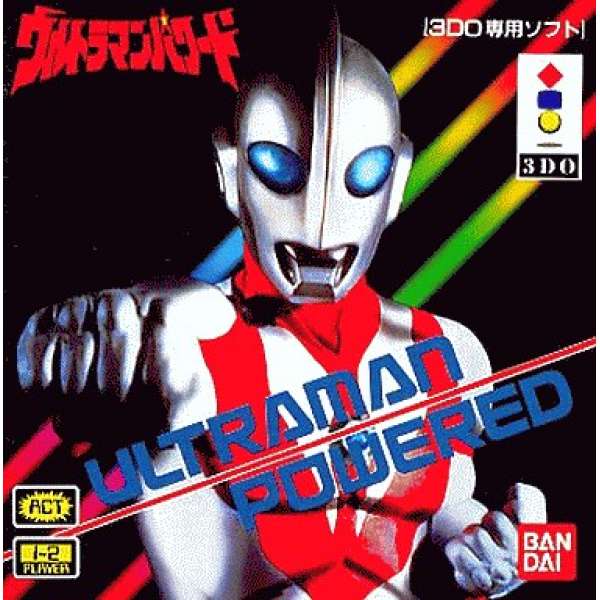
超人力霸王
- 定 價: 9,504円
- 售 價: 0.00
- 庫存量: 0 套
- 已賣出: 0 套
人氣指數: 0.9 / 6 顆星 -
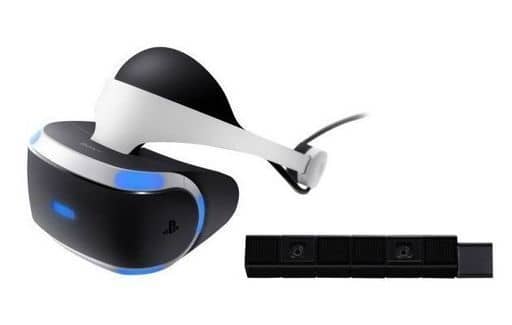
PlayStation VR (PS VR) +攝影機
- 定 價: 54,978円
- 售 價: 0.00
- 庫存量: 0 套
- 已賣出: 0 套
人氣指數: 1.1 / 6 顆星