薩爾達傳說:穆修拉的面具
 2000-04-27
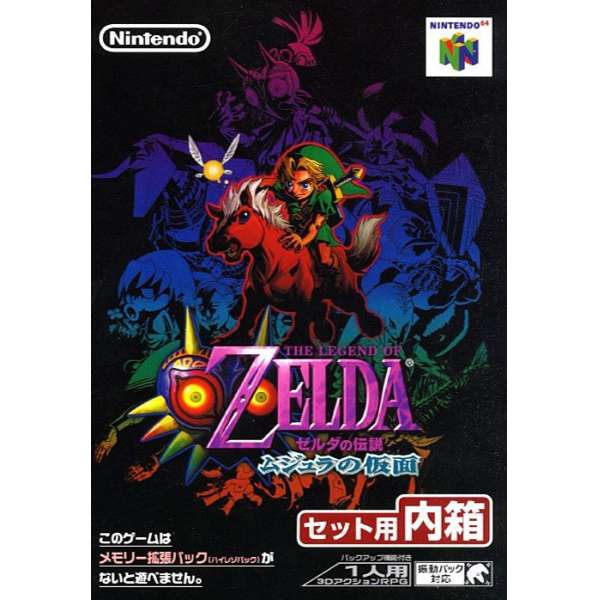
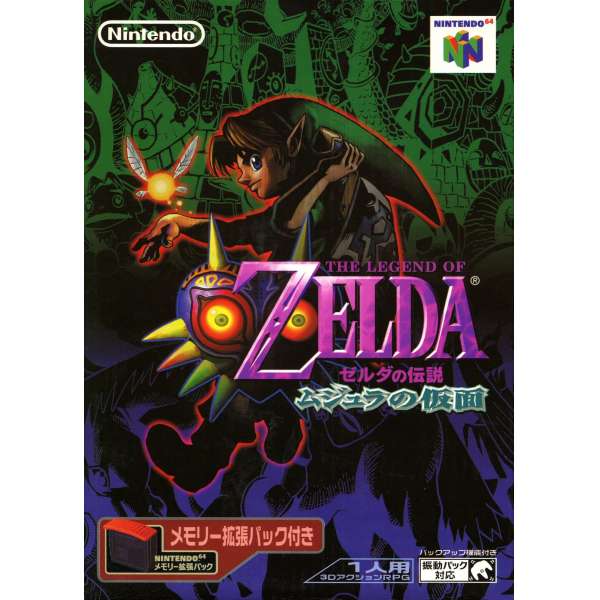
於2000年4月27日在 Nintendo 64(N64)平台上推出的《薩爾達傳說:穆修拉的面具》(ゼルダの伝説 ムジュラの仮面),是繼巔峰神作《時之笛》之後,薩爾達系列史上最黑暗、最怪誕且最具創意的續作。雖然沿用前作的遊戲引擎與部分素材,但其核心靈魂卻截然不同。開發團隊在短短一年內,利用獨特的「三日循環」機制,打造出一場充滿壓抑感與情感深度的末日冒險,讓玩家面臨時間與命運交織的緊張挑戰。
本作是N64平台少數必須搭配「記憶體擴充卡(Expansion Pak)」才能運行的遊戲。這額外的4MB記憶體讓遊戲能同時處理更複雜的NPC行動邏輯、更遠的視距以及更精緻的動態特效。遊戲的核心設計是「三日系統」,整個世界設定在即將毀滅的時間框架中,必須在約54分鐘的現實時間(遊戲內72小時)內,不斷利用時之笛倒回第一天。這一機制將單純的空間探索進化為時間管理與策略性的解謎體驗,使每個行動都充滿緊張感與意義。
故事發生在《時之笛》事件結束之後。林克為尋找離去的妖精夥伴「娜薇」,在森林中遭遇戴著神祕面具的小鬼「骷髏小子」。林克被奪走愛馬伊波娜與時之笛,並被詛咒變成德庫小人,隨後墜入名為「塔米尼亞」的平行世界。在這個世界中,一顆帶著猙獰面孔的巨大月亮正受穆修拉面具魔力牽引,將在三日後撞擊大地。必須在不斷重複的三天中,探索四個神殿喚醒守護神,並收集擁有魔力的各種面具,改變居民的命運,最終於時鐘塔頂端與邪惡的面具本體展開決戰。
在繼承前作「Z 注目」與流暢3D動作基礎上,加入革命性的「面具系統」。透過特定面具,林克可以變身為德庫族(滑翔、吐泡泡)、鼓隆族(滾動、強力攻擊)或索拉族(潛水、迴力鏢),每種形態皆有完全不同的操作邏輯與物理特性,豐富迷宮解謎與探索的策略深度。塔米尼亞世界的每位NPC都有嚴格的三日作息表,必須觀察並記錄他們的行程,選擇正確時間和地點介入,才能完成支線任務。時之笛的操控則不僅限於傳送與存檔,還可吹奏「逆位時之歌」減緩時間,或吹奏「倍速時之歌」跳躍時空,成為掌握末日節奏的核心手段。
自發售以來獲得高度評價,但與《時之笛》的受眾略有不同。評論家盛讚本作在敘事上的勇氣,深入探討孤獨、死亡、恐懼與遺憾等沉重議題,被公認為系列中最具「文學性」的作品。遊戲中的支線任務(如安茱與卡菲的愛情長跑)帶來的情感衝擊甚至超越主線劇情。雖然迷宮數量較少,但每個迷宮的複雜度與設計精巧程度都達到新高度,三日限制雖然曾讓玩家感到壓力,但也成為營造末日緊迫感的絕佳手法。至今仍在Metacritic保持95分的高分,成為被視為「邪典經典」的超時代傑作,展現任天堂在成熟框架下追求極致創新的瘋狂靈魂。
Released on April 27, 2000, for the Nintendo 64 (N64), The Legend of Zelda: Majora’s Mask (ゼルダの伝説 ムジュラの仮面) is the darkest, most bizarre, and most creative sequel in the Zelda series following the landmark masterpiece Ocarina of Time. While it retained the engine and some assets from its predecessor, its core essence is completely different. The development team, within just one year, implemented the unique “three-day cycle” mechanic to create an end-of-the-world adventure filled with tension, emotional depth, and the constant interplay of time and fate.
Majora’s Mask is one of the few N64 titles that requires the Expansion Pak to run. The additional 4MB of memory allows the game to handle more complex NPC behaviors, longer draw distances, and more detailed dynamic effects. Its central design revolves around the “three-day system,” placing players in a world on the brink of destruction, where they must repeatedly rewind time with the Ocarina to the first day, giving the gameplay a strategic layer of time management on top of exploration. Every action carries weight, creating a tense and immersive experience.
The story picks up after the events of Ocarina of Time. Link searches for his lost companion, the fairy Navi, and encounters a mischievous imp called the Skull Kid, who steals his horse Epona and the Ocarina. Cursed into a Deku form, Link falls into the parallel world of Termina, where a menacing, moon-like face is being drawn toward the Earth by the power of Majora’s Mask. The moon is set to crash in three days. Players must navigate the repeating three-day cycle, awaken the guardians in four temples, collect powerful magical masks, alter the fate of Termina’s inhabitants, and ultimately confront the evil mask at the top of the Clock Tower.
Building on the smooth 3D action and Z-targeting of Ocarina of Time, the game introduces the revolutionary “mask system.” Specific masks allow Link to transform into different forms: Deku (can glide and shoot bubbles), Goron (can roll and deliver strong attacks), and Zora (can swim and use boomerangs). Each form has unique movement mechanics and physics, greatly expanding puzzle-solving and exploration possibilities. Every NPC in Termina follows a strict three-day schedule, requiring players to observe and record routines to intervene at the right time and place for side quests. The Ocarina is used not only for teleportation and saving but also to manipulate time, such as slowing it with the Song of Time or skipping forward with the Song of Double Time, becoming a critical tool in controlling the game’s apocalyptic rhythm.
Upon release, Majora’s Mask received high praise, although its audience differed somewhat from Ocarina of Time. Critics lauded its narrative boldness, tackling heavy themes of loneliness, death, fear, and regret, earning recognition as the most “literary” entry in the series. Side quests, such as the long-running romance of Anju and Kafei, delivered emotional impact that sometimes surpassed the main story. While the number of dungeons is smaller, each is intricately designed and challenging, and the three-day time limit, though stressful for some players, perfectly reinforces the game’s sense of looming catastrophe. Majora’s Mask maintains a Metacritic score of 95 and is celebrated as a cult classic that transcends its era, exemplifying Nintendo’s pursuit of extreme innovation within a polished framework.
運費計算方式:
貨款滿1000元運費外加90元
貨款1000以下:買1件運費外加 60元,買2件運費外加 70元,
買3件運費外加 80元 ,買4件運費外加 90元
貨到付款外加30元手續費
外島及大陸地區運費另計
付款方式:
線上刷卡:本站採用Paypal線上刷卡
虛擬帳號匯款:屬於您專屬的虛擬帳戶,方便站長查帳使用,本站強力推薦
實體ATM匯款:請將匯款帳號記錄下來至各大銀行ATM提款機轉帳
超商條碼繳費:請列印本站提供的條碼至四大超商繳費
線上轉帳:透過玉山銀行線上ATM轉帳(此系統只支援IE瀏覽器)
貨到付款:本站採用黑貓宅急便貨到付款
其他注意事項:
如需購買線上點數卡請直接跟站長連絡,本站不提供點數卡的線上付款
-
薩爾達傳說:穆修拉的面具
- 定 價: 6,090円
- 售 價: 0.00
- 庫存量: 0 套
- 已賣出: 0 套
人氣指數: 0.9 / 6 顆星 -
DmC:惡魔獵人 決定版
- 定 價:
- 售 價: 1190.00
- 庫存量: 0 套
- 已賣出: 0 套
 人氣指數: 0 / 6 顆星
 -
忍者龍劍傳
- 定 價:
- 售 價: 0.00
- 庫存量: 0 套
- 已賣出: 0 套
人氣指數: 1.1 / 6 顆星 -
極限競速:地平線 3
- 定 價:
- 售 價: 1690.00
- 庫存量: 0 套
- 已賣出: 0 套
 人氣指數: 0.4 / 6 顆星