讀卡機系列:機器人大戰
 1993-11-13
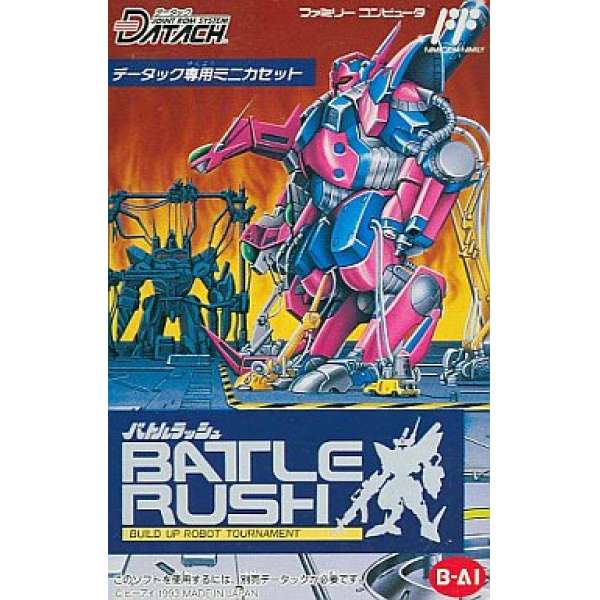
《Battle Rush:機器人組裝大戰》(Datach - バトルラッシュ)是由Bandai於1993年11月13日在任天堂 Famicom(紅白機)上推出的作品,屬於Datach Joint ROM System讀卡機系列中最具原創野心的一款。不同於同系列依附《鋼彈》或《超人》等知名IP的作品,採用完全原創的機器人設計,並以「組裝(Build Up)」為核心概念,結合條碼掃描系統,試圖在8位元主機上打造出類似Armored Core那種高度自訂與對戰的體驗。
在技術表現上,可說是Datach系統的完成型代表。儘管卡帶體積小巧,但內部資料處理邏輯遠比前期作品複雜許多。畫面風格走的是冷調科幻工業路線,機器人點陣圖雖受限於解析度,但透過不同零件替換,外觀變化依然清晰可辨。本作最突出的地方在於條碼資料轉換的效率與多樣性,每一次掃描都能生成豐富的能力數值。背景音樂則以強烈的金屬節奏與電子合成音為主,成功營造出機器人格鬥場中火花四濺的緊張氛圍。
故事設定在近未來的機器人競技世界,人類將機器人對戰發展為一項全民狂熱的競技活動——「Build Up機器人大賽」。玩家扮演一名新手機器人工匠兼駕駛員,從地方賽事一路挑戰到全國頂點。與傳統敘事不同,本作並不強調固定角色或劇情發展,而是將重心放在玩家自身的成長與創造力上。透過不斷收集零件數據與強化機體,玩家逐步打造出屬於自己的最強機器人,這種對「極致性能」的追求成為遊戲最大的驅動力。
在操作與系統設計方面,成功將場外與場內玩法結合,形成獨特的遊戲節奏。條碼掃描所代表的是機體零件,包含頭部、身體、手臂與腿部等,每個條碼都會決定對應部位的性能數值,例如攻擊距離、防禦力、移動速度與重量等。當時玩家最熱衷的玩法之一,就是拿生活中各種商品的條碼進行掃描,嘗試拼湊出數值極端優秀的「混合型最強機體」,這種探索未知的樂趣成為遊戲的一大魅力來源。
進入戰鬥後,遊戲採取偏向即時動作的對戰方式。操控機器人進行移動、防禦、普通攻擊以及消耗能量的必殺技。不同零件的配置會直接影響操作手感,例如重型裝甲雖然防禦力高,但行動遲緩,容易被對手牽制;輕量型機體則靈活但較為脆弱。因此玩家必須在火力、速度與防禦之間取得平衡,這種取捨讓遊戲具備了遠超一般紅白機動作遊戲的策略深度。
在市場評價方面,獲得「原創性極高、系統深度驚人」的肯定。評論普遍認為本作真正發揮Datach系統的潛力,成功將實體資料轉化為遊戲內的多樣化玩法。不過,由於缺乏知名IP加持,加上推出時期已進入16位元主機主導的年代,使其市場普及度相對有限。儘管如此,它在後世玩家與收藏圈中的評價不斷提升,被視為紅白機晚期的隱藏名作之一。整體而言,本作以極具前瞻性的設計理念,預示未來「實體與數位連動」遊戲的發展方向,是一款在8位元硬體限制下展現高度創意與完成度的代表作品。
Battle Rush: Build Up Robot Tournament (Datach - バトルラッシュ) was released on November 13, 1993, for the Nintendo Famicom (NES) by Bandai. Arriving near the very end of the console’s lifespan, it stands as one of the most ambitious original titles designed for the Datach Joint ROM System. Unlike other entries in the same lineup that relied on established franchises such as Gundam or Ultraman, this game boldly introduced a fully original roster of robots. It centered on the concept of “build-up” customization, deeply integrating it with the barcode scanning system to simulate a customizable robot combat experience—something conceptually similar to later titles like Armored Core, but realized within the strict limitations of 8-bit hardware.
From a technical standpoint, Battle Rush represents the most refined and complex implementation of the Datach system. Although the cartridge itself was physically small, it contained significantly more advanced data-processing logic than earlier entries. The visual presentation adopted a cold, industrial sci-fi aesthetic, and while sprite resolution was limited, players could clearly see subtle visual differences as robot parts were swapped. One of the game’s most impressive achievements was its efficient data conversion: each scanned barcode generated a wide range of performance attributes. The soundtrack leaned heavily into metallic percussion and synthesized tones, reinforcing the intense, spark-filled atmosphere of futuristic robot arenas.
The story is set in a near-future society where robot combat has evolved beyond military use into a globally celebrated competitive sport known as the “Build-Up Robot Tournament.” Players take on the role of a rookie engineer and pilot, aiming to rise from regional qualifiers to the national championship. Rather than focusing on fixed characters or a linear narrative, the game emphasizes personal progression and creativity. Players continuously gather new parts data throughout the tournament, driven by the ultimate goal of constructing the strongest possible custom machine. The journey is less about storytelling and more about the pursuit of perfection through collection, scanning, and mechanical optimization.
Gameplay is where Battle Rush truly distinguishes itself, striking a careful balance between off-screen preparation and on-screen action. Its core lies in the barcode-based assembly system, where physical cards represent different robot components such as the head, torso, arms, and legs. By scanning various barcodes, players can freely customize their machines, with each code determining attributes like defense, attack range, mobility, and weight. At the time, players famously experimented with scanning everyday product barcodes—snacks, household goods, and more—in hopes of discovering powerful combinations and creating “ultimate hybrid machines” with maxed-out stats.
Once in battle, the game shifts toward a more action-oriented combat system compared to earlier Datach titles. Players can move, defend, perform standard attacks, and unleash special moves that consume energy. Crucially, different parts directly affect handling—heavier builds result in slower movement but higher durability, while lighter builds allow agility at the cost of defense. This introduces a meaningful layer of strategic balance, forcing players to constantly evaluate trade-offs between firepower, speed, and survivability. The result is a surprisingly deep gameplay loop that blends customization, experimentation, and reflex-based combat.
Upon release, Battle Rush: Build Up Robot Tournament received strong praise for its originality and mechanical depth. Critics noted that it fully realized the potential of the Datach system by transforming physical inputs into a flexible and meaningful customization framework. However, as an original IP, it lacked the immediate appeal of Bandai’s licensed titles, and by 1993 the gaming market had largely shifted toward 16-bit systems, limiting its commercial reach. Despite this, it has since gained recognition among enthusiasts as a hidden gem of the Famicom era. It is widely regarded as one of the most inventive late-stage experiments on the platform—an ahead-of-its-time concept that foreshadowed the future of toy-to-life and customization-driven gameplay, all achieved within the constraints of aging 8-bit hardware.
運費計算方式:
貨款滿1000元運費外加90元
貨款1000以下:買1件運費外加 60元,買2件運費外加 70元,
買3件運費外加 80元 ,買4件運費外加 90元
貨到付款外加30元手續費
外島及大陸地區運費另計
付款方式:
線上刷卡:本站採用Paypal線上刷卡
虛擬帳號匯款:屬於您專屬的虛擬帳戶,方便站長查帳使用,本站強力推薦
實體ATM匯款:請將匯款帳號記錄下來至各大銀行ATM提款機轉帳
超商條碼繳費:請列印本站提供的條碼至四大超商繳費
線上轉帳:透過玉山銀行線上ATM轉帳(此系統只支援IE瀏覽器)
貨到付款:本站採用黑貓宅急便貨到付款
其他注意事項:
如需購買線上點數卡請直接跟站長連絡,本站不提供點數卡的線上付款
-
讀卡機系列:機器人大戰
- 定 價: 2,800円
- 售 價: 0.00
- 庫存量: 0 套
- 已賣出: 0 套
人氣指數: 0.7 / 6 顆星 -
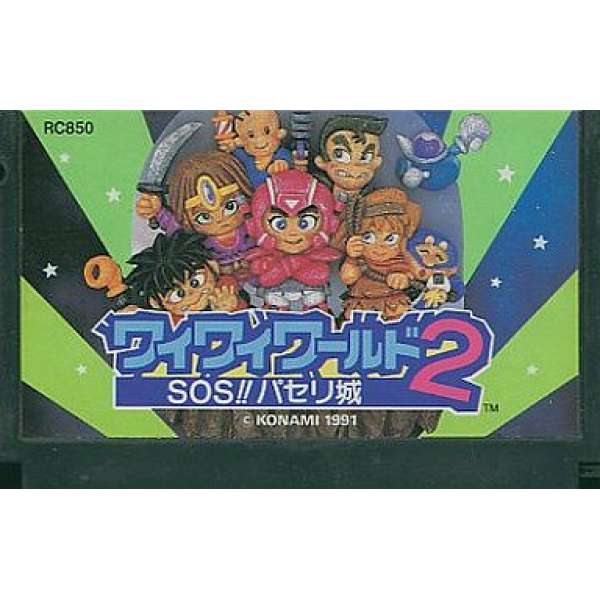
科拿米世界2 (無書盒)
- 定 價: 6,825円
- 售 價: 0.00
- 庫存量: 0 套
- 已賣出: 0 套
人氣指數: 0.7 / 6 顆星