戰場之狼
 1986-04-02
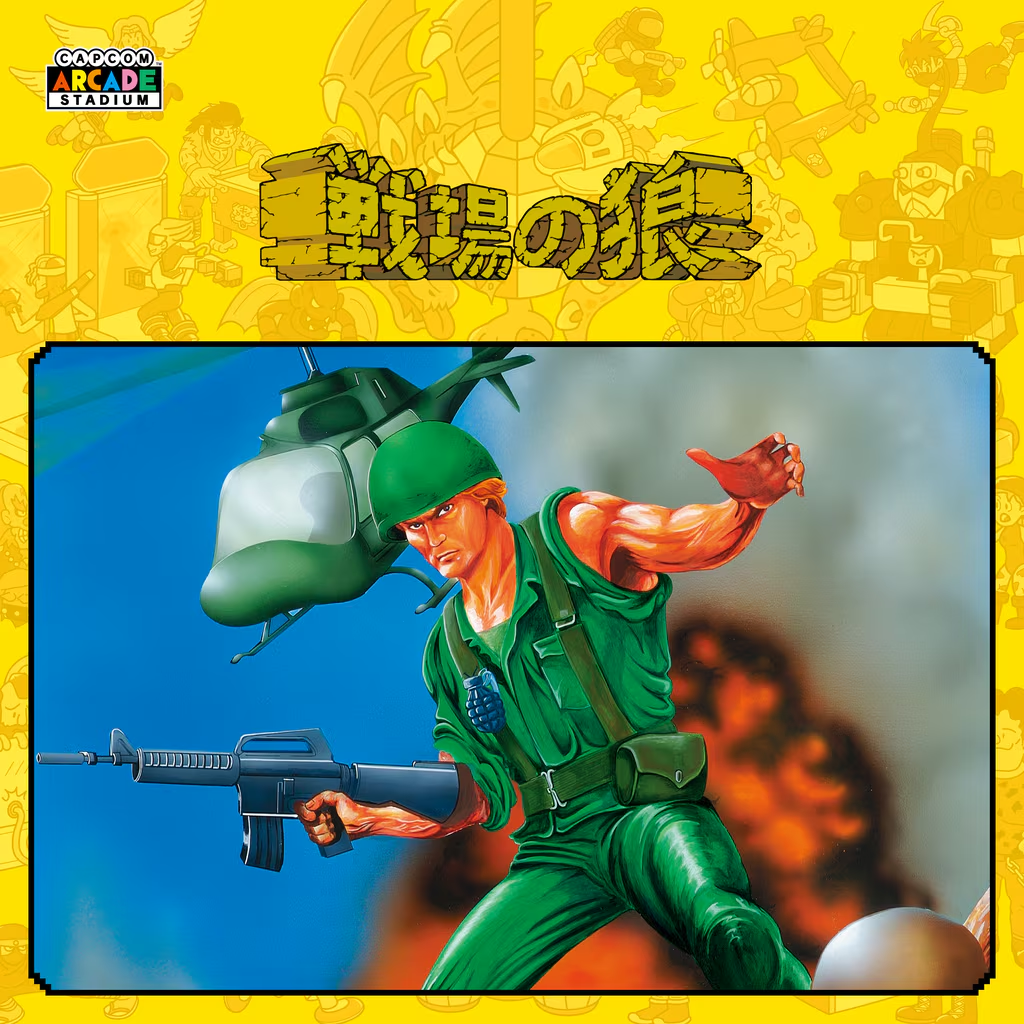
《戰場之狼》(Commando / 戦場の狼)於1985年由Capcom在街機推出,是橫跨80至90年代、深刻影響全球Run-and-Gun類型的里程碑作品。由藤原得郎(Tokuro Fujiwara)監製,而他日後相繼打造出《魔界村》《甜蜜之家》《洛克人》等知名作品,使《戰場之狼》往往被視為Capcom早期風格雛形的象徵。雖然遊戲本身幾乎沒有複雜的劇情敘述,但它以乾脆俐落的方式呈現一名士兵孤身突圍於險惡戰場的殘酷氛圍。主角「Super Joe」從直升機被投放到前線叢林,他沒有後援,也沒有同伴,僅依靠一把彈藥無限的機槍和有限的手榴彈突破敵軍層層防線,解救沿途的俘虜,並設法活著抵達下一個區域。在那個軍事題材多半偏向幻想化的年代,以寫實的戰場、類美軍與軸心軍風格的敵兵造型呈現緊張壓迫的「真實作戰感」,而這股硬派氣質也正是它迅速走紅的主因之一。
操作極度純粹,充分展現出Run-and-Gun類型毫不妥協的精神。主角Super Joe能以八方向移動,並朝面對方向發射機槍。受到射程限制的機槍讓玩家在面對遠距離敵兵時必須冒險逼近,前進本身成為拆解敵陣的關鍵節奏,使整體流程維持在高度壓迫與高速推進的狀態。手榴彈則是另一項重要能力,雖然只能朝畫面上方投擲,但爆炸可以清除掩體後的敵軍與障礙物,補足機槍的弱點。由於手榴彈數量有限,玩家必須收集地圖上的補給箱,一旦用盡,就幾乎無法對付藏在牆壁與壕溝後的兵種,使攻略難度瞬間飆升。整體關卡採縱向強制卷軸,但系統刻意讓敵人無限湧出,以確保停留只會帶來更密集的火力壓制,因此熟悉遊戲的玩家常以一句象徵性心得總結本作的節奏:「不要停下來」。一旦掌握這種高速穿越陣地、瞬間閃避並同時反擊的節奏,便能體驗到 Run-and-Gun類型最原始的爽快感,也明白為何本作被視為此類型的原型作品之一。
關卡設計風格直接而近乎殘酷。八個區域採用循環式配置,每四區重複一次,但敵兵組合卻多樣且危險,包括正面衝鋒、成排射擊、伏兵埋伏、從掩體後丟擲手榴彈的士兵,甚至還有從左右衝出的卡車與吉普車。遊戲並沒有傳統意義上的 Boss,但每個區域末端都會遇上大量敵兵從碉堡或城門湧出的「數量壓制戰」。若玩家成功殲滅全部敵兵,會獲得5000分獎勵,並看到Super Joe抽煙休息的插畫。這些以簡筆呈現的短暫休憩畫面,在荒涼戰場氛圍中顯得格外鮮明,成為許多人記憶中難忘的特色。
在視覺與聽覺呈現上,以80年代典型的像素畫面展現出泥濘、煙塵、軍營與戰壕等細節,敵兵的微小動作更使戰鬥現場具有危險而逼真的質感。音樂則以軍事進行曲風格為基礎,利用FM音源打造強烈節奏感,使玩家宛如置身混亂前線。雖然各關卡幾乎使用同一段主題曲,但這種單曲重複帶來的壓迫反而強化「戰場永不停息」的意象,讓遊戲氛圍更加鮮明。
儘管整體的爽快度受到廣泛稱讚,但高難度與某些不合理的判定也引發不少爭議。例如畫面邊緣的子彈會「穿透」邊界,導致玩家被不明來源的子彈擊中;部分地形具有不可見的凹陷,容易造成莫名其妙的死亡;敵人手榴彈與玩家子彈外觀過於相似,使某些敵彈在視覺上被遮掩。敵人的刷新位置雖固定,但數量與行動模式具有高度隨機性,使玩家必須在固定套路與臨場反應之間找到平衡。即便如此,多數熟練玩家仍認為正是這種高風險、高報酬的設計,讓遊戲極具挑戰與耐玩性。
在街機市場上,《戰場之狼》與《1942》《魔界村》並列為Capcom在80年代的重要招牌。其極端純粹的玩法、快速的節奏、刺激的閃避操作與直接的敵陣突破感,使其在全球獲得高度評價。英國雜誌《Your Sinclair》甚至在1990年稱它是「現代射擊遊戲的曾祖父」,因為它奠定「持槍奔跑突擊」的基礎,啟發《怒》《魂斗羅》《雷電任務》等一整代Run-and-Gun作品,使這類型在80至90年代成為街機主流。
在之後的發展中,Capcom於五年後推出續作《戰場之狼II》(海外稱 Mercs),雖然更接近《魂斗羅》的風格,但仍被視為本作的精神延伸。Super Joe甚至與其他Capcom世界觀產生連結,例如在《希特勒復活》(Bionic Commando)中以相同名字登場,讓不同作品之間的設定交織在一起。家庭平台方面,日本僅推出大幅改編的FC版本,加入更多關卡、地道探索、道具掉落、秘密房間與額外音樂,使其成為不少玩家心目中的獨立名作。歐美與其他地區的家用電腦平台,如Commodore 64與MSX,也有各具特色的移植版本,其中C64版的音樂更受到額外讚譽。後來Capcom也反覆在多款合集作品中收錄本作,包括《Capcom Generations》第四集、《Capcom Classics Collection》、《Capcom Arcade Cabinet》與《Capcom Arcade Stadium》,讓玩家能更方便地重新體驗。
綜觀其影響力,《戰場之狼》之所以能成為經典,不僅因其歷史定位,更因它以移動、射擊與閃避這三個最基本的元素,構築出一種緊張、殘酷、卻令人難以抗拒的遊戲節奏。它的硬派風格、不講情面的判定與源源不絕的敵兵壓力,至今仍展現Run-and-Gun類型最原始的魅力。即使放到今日,它依舊保有那份屬於街機黃金年代的精神——在這個戰場上,只有技術才能讓你生存。
“Commando” (戦場の狼) was released by Capcom in arcades in 1985, becoming a milestone that shaped the global run-and-gun genre throughout the 1980s and 1990s. Produced by Tokuro Fujiwara—who later created classics such as Ghosts ’n Goblins, Sweet Home, and Mega Man—the game is often regarded as a prototype of Capcom’s early stylistic identity. While the game features little in the way of complex storytelling, it sharply and efficiently conveys the brutal atmosphere of a lone soldier carving his way through a hostile battlefield. The protagonist, Super Joe, is dropped into a jungle frontline from a helicopter with no backup and no allies; armed only with an unlimited-ammo machine gun and a limited supply of grenades, he must break through layer upon layer of enemy defenses, rescue POWs along the way, and survive long enough to reach the next area. At a time when most military-themed games leaned heavily toward fantasy, Commando distinguished itself with its realistic depiction of war—its terrain, its enemy designs inspired by U.S. and Axis forces, and its oppressive sense of “real combat.” This hardened tone was one of the key reasons for its sudden rise in popularity.
The gameplay is extremely pure, embodying the uncompromising essence of the run-and-gun genre. Super Joe can move in eight directions and fire his machine gun toward the direction he faces. Because the gun’s range is limited, players must often risk closing in on distant enemies, turning forward movement itself into a core part of dismantling enemy formations. This keeps the game in a constant state of high pressure and forward momentum. Grenades provide another crucial option; though they can only be thrown upward, their explosions can clear enemies behind cover or destroy obstacles, compensating for the machine gun’s shortcomings. Since grenades are limited, players must collect supply crates on the map, and running out renders Joe almost incapable of dealing with entrenched enemies—drastically increasing the difficulty. Each stage uses a vertically forced-scrolling layout, and the game intentionally spawns enemies endlessly to punish stopping. Veterans often summarize the game’s rhythm with a single iconic lesson: “Don’t stop.” Once players grasp the pacing of darting through enemy lines, dodging instantly, and counterattacking at high speed, they experience the primal thrill that defines the run-and-gun genre—one reason Commando is seen as its archetype.
The level design is direct, harsh, and nearly brutal. The eight zones loop every four areas, but enemy formations are varied and consistently dangerous: frontal rushes, volleys of rifle fire, ambushes from trenches, soldiers hurling grenades from behind cover, and trucks or jeeps suddenly charging in from the sides. Although the game lacks traditional “boss” battles, every zone ends with a “mass assault” in which swarms of enemies pour out of bunkers or gatehouses. Clearing all enemies rewards the player with 5,000 points and a brief illustration of Super Joe resting and smoking. These simple, sketch-like interludes stand out vividly against the bleak battlefield atmosphere and remain among the game’s most memorable touches.
Visually and aurally, Commando uses classic 1980s pixel art to portray mud, smoke, military camps, and trenches, while subtle animations in the enemy sprites add a sense of danger and realism to the action. The music adopts a military march style, using FM synthesis to create a driving rhythm that feels like the chaos of a front line. Although nearly every stage uses the same main theme, its relentless repetition reinforces the idea of a battlefield that never stops, strengthening the game’s identity.
Despite its praised intensity and straightforward action, the game’s high difficulty and certain questionable mechanics sparked controversy. Bullets at the edge of the screen can “clip through” boundaries, striking players from seemingly nowhere; some terrain contains invisible pits that cause sudden, inexplicable deaths; and enemy grenades resemble player bullets so closely that incoming projectiles are often obscured. Enemy spawn points may be fixed, but their numbers and movements contain significant randomness, forcing players to balance memorization with instinctive reactions. Even so, experienced players often regard this high-risk, high-reward design as the source of the game’s addictive depth.
In the arcade market, Commando stood alongside 1942 and Ghosts ’n Goblins as one of Capcom’s flagship titles of the 1980s. Its extreme simplicity, rapid pacing, tense dodging, and direct assault-driven gameplay earned it acclaim worldwide. In 1990, the British magazine Your Sinclair famously called it “the great-grandfather of modern shooters,” noting how it established the foundation for “run-and-gun combat,” inspiring titles such as Ikari Warriors, Contra, and Heavy Barrel. Throughout the 1980s and 1990s, run-and-gun games dominated arcades thanks to the trail blazed by Commando.
In later years, Capcom released its sequel Commando II (known overseas as Mercs) five years after the original. Although more reminiscent of Contra, it is still regarded as a spiritual continuation of the first game. Super Joe also became linked to other Capcom titles; he appears under the same name in Bionic Commando, intertwining multiple Capcom universes. For home platforms, Japan received only an extensively reworked Famicom version featuring additional stages, underground passages, item drops, secret rooms, and new music—making it a beloved childhood title for many players. Western platforms such as the Commodore 64 and MSX also received unique ports, with the C64 version’s soundtrack being particularly celebrated. Capcom has since re-released the title in numerous collections, including Capcom Generations Vol. 4, Capcom Classics Collection, Capcom Arcade Cabinet, and Capcom Arcade Stadium, making it easy to revisit today.
Ultimately, the enduring legacy of Commando lies not only in its historical significance but in how it distilled the three most fundamental mechanics—movement, shooting, and dodging—into a tense, brutal, and irresistibly engaging rhythm. Its hard-edged tone, unforgiving hit detection, and unending waves of enemies continue to embody the rawest spirit of the run-and-gun genre. Even today, it retains the unmistakable essence of the arcade golden age: on this battlefield, only skill determines survival.
運費計算方式:
貨款滿1000元運費外加90元
貨款1000以下:買1件運費外加 60元,買2件運費外加 70元,
買3件運費外加 80元 ,買4件運費外加 90元
貨到付款外加30元手續費
外島及大陸地區運費另計
付款方式:
線上刷卡:本站採用Paypal線上刷卡
虛擬帳號匯款:屬於您專屬的虛擬帳戶,方便站長查帳使用,本站強力推薦
實體ATM匯款:請將匯款帳號記錄下來至各大銀行ATM提款機轉帳
超商條碼繳費:請列印本站提供的條碼至四大超商繳費
線上轉帳:透過玉山銀行線上ATM轉帳(此系統只支援IE瀏覽器)
貨到付款:本站採用黑貓宅急便貨到付款
其他注意事項:
如需購買線上點數卡請直接跟站長連絡,本站不提供點數卡的線上付款
-
戰場之狼
- 定 價:
- 售 價: 0.00
- 庫存量: 0 套
- 已賣出: 0 套
人氣指數: 0.3 / 6 顆星 -
東方彈幕神樂
- 定 價:
- 售 價: 0.00
- 庫存量: 0 套
- 已賣出: 0 套
 人氣指數: 1.1 / 6 顆星
 -
楓之谷R:經典新定義
- 定 價:
- 售 價: 0.00
- 庫存量: 0 套
- 已賣出: 0 套
人氣指數: 0.8 / 6 顆星 -
七龍珠Z:真武道會2
- 定 價: 5,184円
- 售 價: 0.00
- 庫存量: 0 套
- 已賣出: 0 套
 人氣指數: 1.2 / 6 顆星