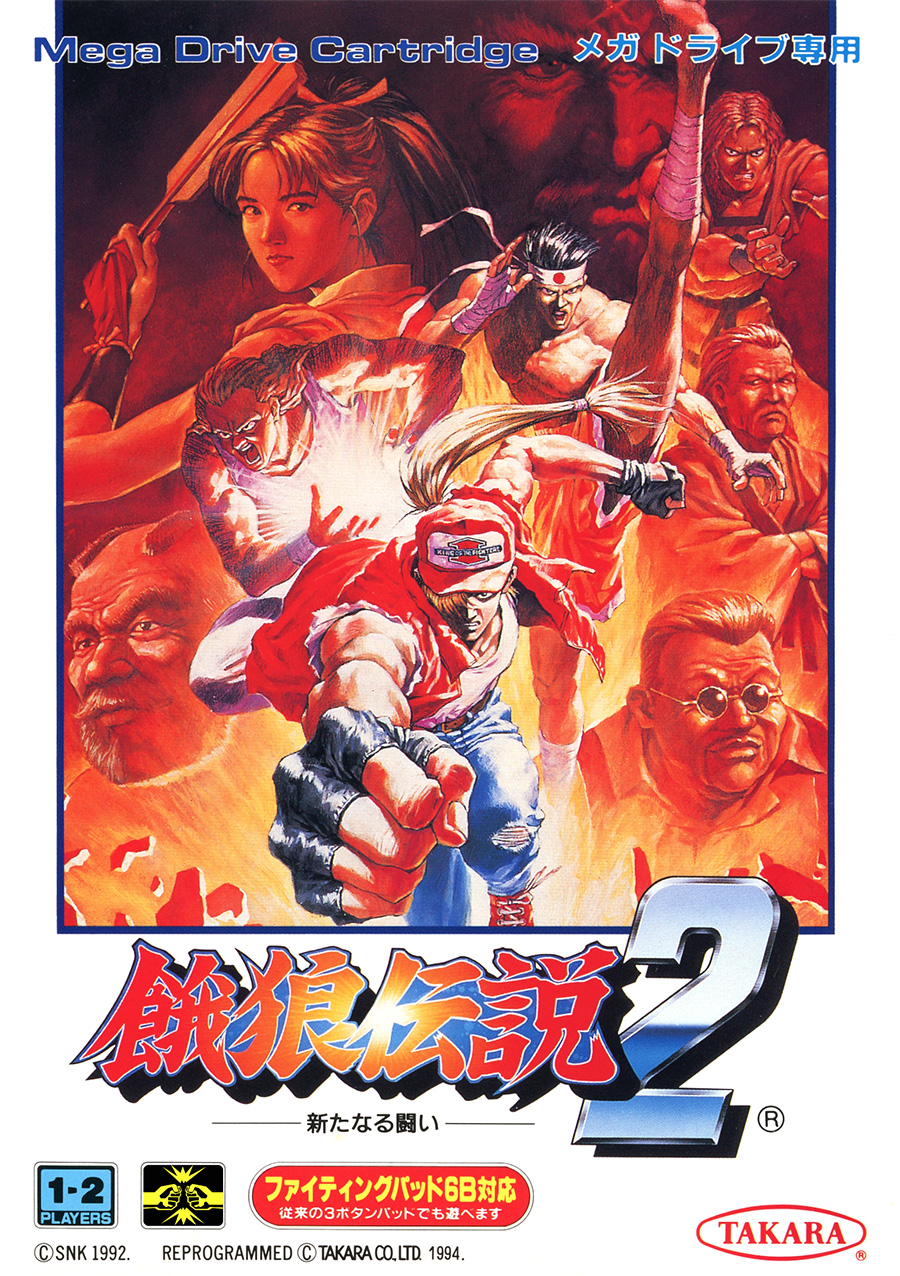
餓狼傳説2
 1994-06-24
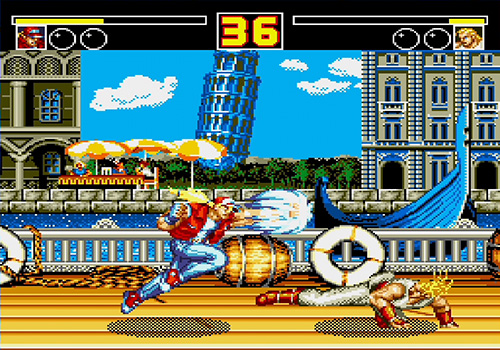
《餓狼傳說2:新たなる闘い》(Fatal Fury 2)於1992年12月在街機平台正式推出,是SNK早期2D對戰格鬥遊戲中的重要里程碑,也是「餓狼傳說系列」真正奠定名氣與風格的代表作之一。它身為100メガショック(100 Megashock)第二彈,以比前作更成熟的系統、更華麗的畫面、更多角色與更具戲劇性的世界觀,成為當時格鬥遊戲熱潮中最具份量的作品之一。
故事延續初代《餓狼傳說 宿命之鬥》,在宿敵吉斯.霍華德(Geese Howard)被擊敗後,南鎮一度迎來短暫和平。然而在黑暗世界中,吉斯的死卻同時引起某位神秘強者的注意。他名為「沃夫岡.克勞薩」(Wolfgang Krauser),是歐洲斯特羅海姆城的城主與地下世界的支配者,被視為連吉斯都畏懼三分的可怕存在。得知擊敗吉斯的人就在南鎮後,他決定親自舉辦新一屆「King of Fighters」大賽,並將舞台擴大到全世界,藉此找出真正的強者。於是,來自各國的高手紛紛響應這場新競技,而初代的三位主角——特瑞、安迪與東丈——也再度踏上旅途,為了力量、為了信念、為了證明自我而戰。
本作的最大特色,是在遊戲系統全面進化之下仍保留初代的核心精神。系列著名的「雙線戰鬥系統」在這一代首次開放給玩家自由操作,攻擊按鈕的組合可以讓角色主動移動至前後兩條軸線,也能施展將對手擊飛到另一條軸線的攻擊,讓戰鬥呈現獨特的立體感。此外,首度加入影響日後無數格鬥遊戲的「超必殺技」概念:只有在體力降到一定程度、生命槽變成紅色時才能施展,在當年是非常震撼的創舉。當時遊戲說明書並未揭露超必殺技的指令,只能靠街機現場互相交流或自行摸索,反而形成一種神祕而熱血的格鬥文化記憶。
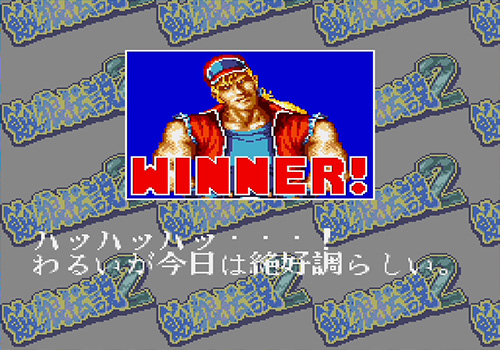
操控方面也比前作完善許多,Neo Geo的四按鈕設計被完整發揮成「弱拳、強拳、弱腳、強腳」,動作判定更明確、反應更靈活。每四場便會出現的加分挑戰關卡延續初代傳統,用擊碎石柱的方式讓玩家在激烈戰鬥中獲得喘息節奏。角色之間也不再是固定對戰排列,而是以全角色循環挑戰的方式進行,甚至可以碰上自己的分身,並附帶額外的對白與顏色設定,開啟後來 SNK 各作品慣用的「2P 顏色」傳統。
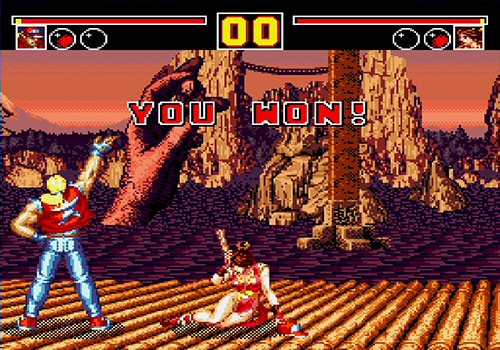
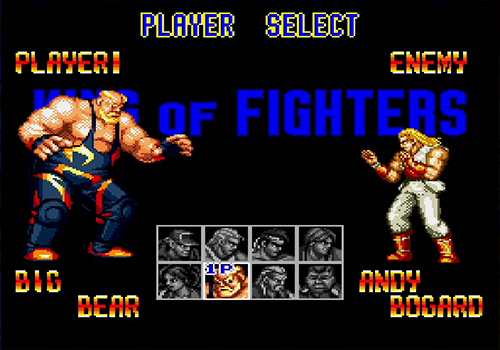
角色陣容方面,除承襲初代三兄弟:特瑞.博加德、安迪.博加德與東丈之外,加入多名在系列中日後成為人氣王的角色。不知火舞以明亮的大紅服裝、靈活的忍術身法與大膽性感的設計一舉走紅,成為SNK的代表性女角色之一。韓國跆拳道高手金家藩以強烈的正義感、乾脆俐落的踢技受到不少玩家喜愛。從前作脫下假面、以本名「Big Bear」回歸的雷電則展現強烈的重量級壓迫感。另一位新加入的重量級角色程清山(Cheng Sinzan)以巨大的身形與太極拳混合衝撞技獲得鮮明個性。年長柔道家山田十平衛則為隊伍增添傳統武術底蘊。隨著遊戲進展,玩家會逐步面對由克勞薩麾下的三闘士:比利.卡恩、拳王Axel Hawk與鬥牛士 Laurence Blood,最終在壯闊威嚴的城堡大廳中迎戰使用莫札特《安魂曲・震怒之日》為舞台音樂的最終頭目克勞薩。這場最終戰以強度、氣場與演出震懾了當年的玩家。
上市後獲得極高注目度。本作被視為SNK在格鬥遊戲市場正面對抗CAPCOM《快打旋風II》的一大力作,它以華麗的招式、厚重的武打感、角色的鮮明個性與戲劇性強烈的世界觀,展現出SNK與CAPCOM不同的格鬥美學。當時遊戲雜誌《ゲーメスト》的年度票選中,本作奪得大賞第3名、最佳對戰格鬥遊戲第4名、最佳演出第5名與最佳音樂第5名,可見其在街機市場的高人氣。玩家們對其進化的操作手感、突破性的超必殺系統、豐富的角色陣容與濃厚的歐陸暗黑風格稱讚不斷,尤其是克勞薩最終戰的氣勢與音樂,更被認為是1990年代格鬥遊戲最具震撼力的頭目之一。當然,也有玩家認為遊戲難度偏高,AI 讀招能力極強,對新手而言挑戰性不低。儘管如此,本作依然成功地在競爭激烈的格鬥遊戲市場站穩腳步,並直接促成後來更加洗鍊的《餓狼傳說 SPECIAL》的誕生。
總而言之,《餓狼傳說2》不僅是技術層面進步巨大、玩法豐富的格鬥遊戲,更是在視覺風格、角色個性與世界觀建構上真正奠定「餓狼傳說」品牌地位的重要作品。它象徵SNK格鬥遊戲的黃金起點,也是許多玩家心中無法取代的街機時代記憶。
Fatal Fury 2: The New Battle launched in arcades in December 1992 and quickly became a major milestone in SNK’s early 2D fighting-game history. It was also the title that firmly established the identity and popularity of the Fatal Fury series. As the second entry in the “100 Mega Shock” lineup, the game delivered a far more refined system, flashier visuals, a larger roster, and a more dramatic world setting than its predecessor—solidifying its status as one of the most significant fighting games during the height of the genre’s early-1990s boom.
The game’s story continues after the first Fatal Fury: King of Fighters. With the death of Geese Howard, South Town briefly regains peace. However, in the shadows of the criminal underworld, Geese’s downfall draws the attention of a far more terrifying figure—Wolfgang Krauser, the lord of Castle Stroheim in Europe and a ruler feared even within the darkest circles. Upon learning that the man who defeated Geese resides in South Town, Krauser organizes a new worldwide “King of Fighters” tournament, aiming to draw out the true elite. Fighters from across the globe respond to his challenge, while the original trio—Terry Bogard, Andy Bogard, and Joe Higashi—once again set out on a journey to test their strength, uphold their beliefs, and prove themselves in the arena.
One of the game’s biggest innovations is how it evolves its systems while keeping the spirit of the original intact. The series-defining two-plane battle system is, for the first time, placed fully under the player’s control. Through button combinations, players can freely hop between foreground and background planes or smash opponents into the other lane, giving the fights a dynamic, almost 3D sense of movement unique among its contemporaries.
This entry also introduces a concept that would influence countless fighting games thereafter: the Desperation Move. These high-impact super techniques can only be executed when a character’s life bar drops to the flashing red zone—a thrilling idea at the time. Because the move inputs were intentionally hidden from instruction cards, players had to rely on word-of-mouth discoveries and arcade-side experimentation, creating a nostalgic sense of mystery and excitement.
Gameplay handling is greatly improved as well. The Neo Geo’s four-button layout is fully utilized as light punch, heavy punch, light kick, and heavy kick, giving clearer hit properties and more responsive combat flow. The stone-smashing bonus stages, appearing every four fights, provide a familiar breather between battles. The fixed opponent order from the previous game is gone; instead, players fight through a full roster rotation, complete with mirror matches that include unique dialogue and alternate colors—marking the beginning of the SNK tradition of “2P colors.”
The character lineup is one of the game’s most memorable aspects. Alongside the returning Terry, Andy, and Joe, several newcomers would go on to become iconic within the franchise. Mai Shiranui debuted here, instantly standing out with her bright red costume, agile kunoichi movements, and boldly sexy design—eventually becoming one of SNK’s signature characters. Kim Kaphwan, a Tae Kwon Do master with a rigid sense of justice, impressed players with his sharp kicks and upright personality. Raiden, now unmasked and returning under his real persona Big Bear, brought heavy-hitting presence to the cast. Cheng Sinzan introduced a comedic yet powerful fighting style mixing Taiji principles with brute body checks. Veteran judoka Jubei Yamada added a touch of traditional martial-arts flavor.
As the game progresses, players face the three guardians under Krauser’s command: Billy Kane, Axel Hawk, and Laurence Blood. The final confrontation takes place in Krauser’s majestic castle hall, accompanied by the dramatic use of Mozart’s “Requiem: Dies Irae”—a battle whose impact, atmosphere, and sheer intensity left a deep impression on players at the time.
Upon release, Fatal Fury 2 drew significant attention. It was widely seen as SNK’s major counter to Capcom’s Street Fighter II, presenting an SNK-style fighting aesthetic built on dramatic flair, weighty physical impact, distinct personalities, and a darker European-themed world setting. In Gamest magazine’s annual awards, the game earned 3rd place overall, 4th in Best Fighting Game, 5th in Best Production, and 5th in Best Music—evidence of its strong arcade popularity.
Players praised the refined controls, the groundbreaking Desperation Move system, the diverse cast, and the stylishly dark tone. Krauser’s final battle, in particular, is still regarded as one of the most powerful and iconic boss encounters of 1990s fighting games. Of course, some players found the difficulty steep, noting the CPU’s notorious ability to read inputs—but despite this, the game established a solid foothold in a fiercely competitive market and directly set the stage for the polished follow-up, Fatal Fury Special.
In short, Fatal Fury 2 is not only a major technical leap and a richly designed fighting game, but also the title that truly defined the series’ identity in terms of visuals, character appeal, and world-building. It marks the beginning of SNK’s golden era of fighting games and remains an irreplaceable memory for many arcade fans.
運費計算方式:
貨款滿1000元運費外加90元
貨款1000以下:買1件運費外加 60元,買2件運費外加 70元,
買3件運費外加 80元 ,買4件運費外加 90元
貨到付款外加30元手續費
外島及大陸地區運費另計
付款方式:
線上刷卡:本站採用Paypal線上刷卡
虛擬帳號匯款:屬於您專屬的虛擬帳戶,方便站長查帳使用,本站強力推薦
實體ATM匯款:請將匯款帳號記錄下來至各大銀行ATM提款機轉帳
超商條碼繳費:請列印本站提供的條碼至四大超商繳費
線上轉帳:透過玉山銀行線上ATM轉帳(此系統只支援IE瀏覽器)
貨到付款:本站採用黑貓宅急便貨到付款
其他注意事項:
如需購買線上點數卡請直接跟站長連絡,本站不提供點數卡的線上付款
-
餓狼傳説2
- 定 價:
- 售 價: 0.00
- 庫存量: 0 套
- 已賣出: 0 套
人氣指數: 0.3 / 6 顆星 -
機動戦士ガンダム VOL.2~JABURO~
- 定 價: 5,478円
- 售 價: 0.00
- 庫存量: 0 套
- 已賣出: 0 套
人氣指數: 0.3 / 6 顆星