戰鬥傳說 / 蒙納克皇族最終戰鬥傳說
 1994-06-24
《戰鬥傳說》最初於1991年在PC-9800系列上推出,作為日本Falcom「龍殺者(Dragon Slayer)」系列的第七作。雖然作品名義上屬於同系列,但它完全拋離了既有的奇幻元素,沒有龍、沒有聖劍,核心變成極具戰略深度的即時陣地爭奪遊戲。後來本作經過調整與追加內容,以更豐富的形式推出 Mega Drive的《とことん戦闘伝説》(Tokoton Sentou Densetsu),也就是玩家最熟知的加強版。
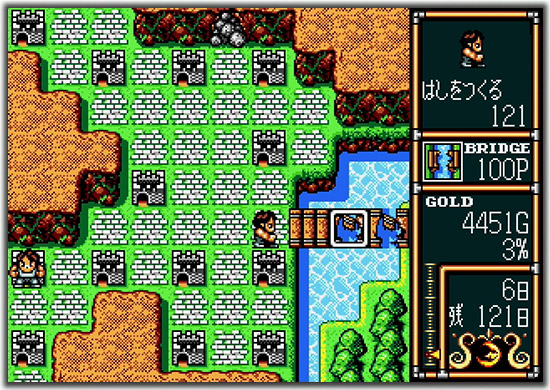
遊戲本質是帶有即時制運作的RTS,但又與一般複雜的RTS不同,《戰鬥傳說》更像流動式、棋盤式的「領地擴張模擬」。玩家扮演某一國家的君主,目標是在有限的日數內侵略、削弱、包圍並徹底擊倒其他三個勢力,最終統一整張地圖。
主舞台是一張分為多種地形的地圖,每張地圖預設四個國家,操作其中一國,其餘全部由CPU控制。君主本身是一個戰鬥力極高的主角單位,而領地則由不斷湧出的士兵擴張與經營。
遊戲最大特色,是「稅率、領地擴張與軍事行動三者彼此牽制」。君主停留在城內時,國庫會持續累積金錢;稅率越高,金錢累積越快,但士兵士氣會下降、行動變得遲緩,甚至會影響擴張速度。若稅率太低,士兵雖然積極工作,但玩家將完全沒有資金去建設領地,例如不能架橋、不能清除障礙、也無法建立新的據點。如何在金錢、效率、兵力密度之間取得最佳平衡,就是遊戲最核心的樂趣。
士兵本身則具有S、M、L三種大小,象徵不同程度的HP。他們會自動開墾荒地、架橋、清理障礙、佈下新據點、甚至破壞敵人領地。所有這些行為都會消耗HP,因此士兵也會不斷消失與重生,整張地圖始終處於動態流動狀態。
君主則是地圖上最強的單位,擁有遠高於士兵的生命值,能單人切入敵領,破壞敵人據點,迫使對手中斷擴張甚至陷入防守。君主行動具有高度風險:若走得太遠,稅收會中斷,若被圍毆致死則直接遊戲結束。這讓玩家始終必須判斷「現在是該猛攻、還是該回城回血?」的關鍵時機。
雖然系統看起來繁複,但 Falcom 在設計上加入大量「自動化支援」,使得新手也能快速上手。士兵若設定為「自動」,便會主動擴張領地與執行所有基本作業。稅率也能設定成「自動最佳化」,系統會持續根據局勢調整最適合的稅率。對於不擅長太多micromanagement的玩家,幾乎只需要操控君主作戰即可。這使得遊戲真正的深度,往往是建立在「時機判斷」與「大局觀」上,而不是繁瑣的操作。
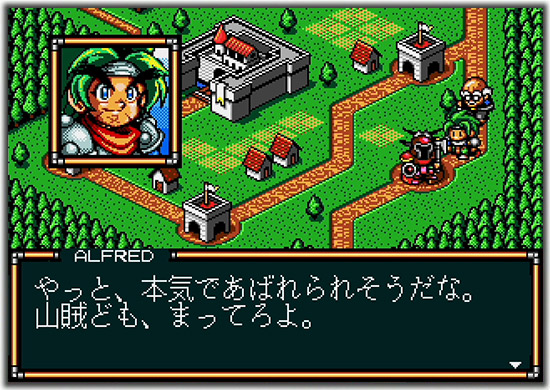
提供兩大方向的遊玩方式。故事模式採用輕快的動畫風格,以奇幻元素帶出新手教學,早期關卡非常溫和,即使不熟悉策略遊戲的玩家也能穩定進入狀況。然而進入中後段後,難度顯著上升,關卡中會加入惡魔之森、掠奪財產的飛龍等高難度機制,讓節奏與壓力大幅增加。故事逐漸轉向較嚴肅的氛圍,也加入諸多專為Mega Drive版打造的特殊機關,令系列老玩家也能感到挑戰。
若選擇普通或進階模式,則能挑戰PC-9801原版《Lord Monarch》與《Advanced Lord Monarch》所有的關卡。這些模式不再有劇情,而是純粹比拼地圖解法。每張地圖都有預設可使用的總天數,若未能快速通關,日數會變成負數,使後續關卡變得異常艱難,因此效率是玩家最大的課題。
遊戲世界由城牆、平地、荒地、水域、洞窟、橋樑、障礙物等地形組成。玩家能花錢架橋、清除障礙或造新據點,使地圖逐步轉化為己方領土。地圖上的洞窟會源源不絕地產生怪物,玩家能派兵封印。橋樑則可修復、建造或拆毀,形成可控的choke point,影響戰局走向。
據點更是地圖控制的核心:據點會提高人口、產生士兵,同時其人口密度直接影響領地擴張速度。玩家若能快速建立一條高密度的據點網絡,便可成倍擴張在地圖上的影響力。而無論是敵友雙方,所有勢力都共享最多64個單位的硬性上限,這形成了奇妙的戰略博弈:若CPU把單位數塞滿,雖然兵多勢眾,但後續將無法新增據點,也無法迅速反應突發狀況。
PC-98原版與《Advanced》版都擁有地圖編輯器,能自由創造關卡,形成無限延伸的玩法,雖然後續主機版移植未保留此功能,但仍有愛好者自行製作工具,讓玩家能在部分版本中匯入自製地圖,延續遊戲生命力,至今仍有同好社群在交流新地圖。
自推出後獲得頗高評價,尤其在策略遊戲愛好者之間被視為「易上手、難精通」的代表作。當時多數即時戰略遊戲複雜度非常高,但《戰鬥傳說》透過自動化、大比例視角與領地流動系統,能以「宏觀策略」取代微操,使其具有極強的中毒性。
Mega Drive加強版加入的故事模式,雖然使部分老玩家對大量的動畫風表現感到不習慣,但對更多新玩家而言,這使得作品更親民、娛樂性更強。PC和Mega Drive兩種版本的差異,也成為玩家之間長期熱議的話題。整體而言,本作因其簡單外表下的深度策略性、強烈節奏感、以及極具特色的領地流動玩法,被視為Falcom在策略遊戲領域最成功的作品之一,即便年代久遠仍有玩家持續回味。
“Lord Monarch” (known in its enhanced Mega Drive release as Tokoton Sentou Densetsu) was first launched in 1991 for the PC-9800 series as the seventh entry in Falcom’s long-running “Dragon Slayer” franchise. Although it belongs to the same lineage in name, the game completely abandons the fantasy themes traditionally associated with the series—there are no dragons, no holy swords, and no dungeon-crawling elements. Instead, it transforms into a real-time territorial strategy game built around resource pressure, tactical timing, and map domination. The later Mega Drive version significantly expanded the content, refined the gameplay, and introduced new modes, becoming the version most players are familiar with today.
At its core, Lord Monarch operates like a real-time strategy game, but it is far more streamlined and board-like than conventional RTS titles. The game plays as a continuous flow of expanding borders rather than a system of complex unit commands. Players take the role of a monarch seeking to conquer an entire map within a limited number of days, competing against three CPU-controlled nations. Each map is divided into various terrain types, with each faction occupying one corner of the battlefield. The monarch acts as a highly durable hero unit, while the kingdom’s territory is expanded through the constant emergence of autonomous soldiers.
A defining mechanic of the game is the delicate relationship between tax rate, territorial expansion, and military activity. When the monarch remains inside the castle, money accumulates in the treasury. Raising the tax rate accelerates income but lowers soldier morale, slowing their work efficiency and delaying territorial growth. Setting taxes too low keeps soldiers motivated, but leaves the kingdom starved of funds, preventing critical actions such as clearing obstacles, building bridges, or establishing new outposts. Striking the perfect balance between money, efficiency, and troop density forms the strategic heart of the experience.
Soldiers come in three sizes—S, M, and L—representing different HP levels. They automatically perform essential tasks: cultivating land, building bridges, clearing debris, establishing new bases, and even demolishing enemy territory. These activities consume HP, causing soldiers to die and respawn constantly, which keeps the entire map in perpetual motion. The monarch, by contrast, is the single strongest unit on the map, capable of destroying enemy outposts or forcing opponents into defensive positions. However, sending the monarch too far from home halts taxation, and if the monarch is killed in enemy territory, the game ends immediately. Every offensive push becomes a high-risk judgement of whether to strike deeper or retreat to replenish strength.
Despite its layers of interlocking systems, Falcom designed the game with extensive automation to ensure accessibility. Soldiers can be set to fully automatic behavior, carrying out all essential tasks without player input. The tax rate can also be placed on auto-optimization, with the system adjusting it according to the situation. Players who dislike heavy micromanagement can simply focus on controlling the monarch, letting the kingdom evolve on its own. This design shifts the strategic emphasis from mechanical precision to timing, positioning, and long-term map awareness.
Two major play styles are offered. The Story Mode uses a lighthearted animated presentation to introduce beginners to the mechanics. Early missions are extremely forgiving, allowing newcomers to adapt comfortably. However, the difficulty escalates sharply in the mid-to-late game, adding hazards such as demon forests and treasure-stealing wyverns, transforming the tone into something more serious. These features, along with several Mega Drive–exclusive map gimmicks, ensure that even veteran players face genuine challenges. The Normal and Advanced modes instead provide the complete stage sets from the original PC-9801 Lord Monarch and Advanced Lord Monarch. These modes contain no narrative; they are pure map-solving challenges. Each stage has a limited number of days allotted, and failing to clear it quickly results in negative carryover days, escalating the difficulty of subsequent levels and making efficiency the ultimate goal.
The world map consists of walls, plains, wastelands, rivers, caves, bridges, and various obstacles. Players can spend money to construct bridges, remove obstacles, or build new bases, gradually converting the map into their own territory. Caves continuously spawn monsters until sealed by soldiers. Bridges can be repaired, constructed, or destroyed, offering players fine control over chokepoints and battle flow. Outposts form the structural backbone of territorial control—generating soldiers, raising population density, and accelerating border expansion. Smart players will create dense networks of outposts to rapidly exert map dominance. Meanwhile, all factions share a strict limit of sixty-four active units, creating unique mind games. If the CPU saturates its unit cap, it may appear overwhelming but becomes unable to build new bases or respond effectively to sudden threats.
The original PC-98 and Advanced editions both include a full map editor, enabling unlimited user-created stages. Although this feature did not carry over to most console ports, fans later developed tools to import custom maps into certain versions, keeping the community active and extending the game’s longevity.
Upon release, the game earned strong praise, especially among strategy enthusiasts, who regarded it as a perfect example of “easy to learn, difficult to master.” At a time when real-time strategy games were often overwhelmingly complex, Lord Monarch distinguished itself through automation, large-scale map flow, and its territorial mechanics, creating a uniquely addictive and rhythm-driven experience. The Mega Drive version’s story mode divided opinions—some long-time fans found the cartoon aesthetic unusual, while many newcomers felt it made the game far more inviting and entertaining. Debates over the differences between the PC and Mega Drive versions remain lively among fans to this day.
Overall, Lord Monarch is considered one of Falcom’s most successful strategy titles. Beneath its simple appearance lies deep strategic nuance, fast-paced territorial interplay, and an engaging sense of rhythm that continues to attract returning players even decades after its original release.
運費計算方式:
貨款滿1000元運費外加90元
貨款1000以下:買1件運費外加 60元,買2件運費外加 70元,
買3件運費外加 80元 ,買4件運費外加 90元
貨到付款外加30元手續費
外島及大陸地區運費另計
付款方式:
線上刷卡:本站採用Paypal線上刷卡
虛擬帳號匯款:屬於您專屬的虛擬帳戶,方便站長查帳使用,本站強力推薦
實體ATM匯款:請將匯款帳號記錄下來至各大銀行ATM提款機轉帳
超商條碼繳費:請列印本站提供的條碼至四大超商繳費
線上轉帳:透過玉山銀行線上ATM轉帳(此系統只支援IE瀏覽器)
貨到付款:本站採用黑貓宅急便貨到付款
其他注意事項:
如需購買線上點數卡請直接跟站長連絡,本站不提供點數卡的線上付款
-
戰鬥傳說 / 蒙納克皇族最終戰鬥傳說
- 定 價:
- 售 價: 0.00
- 庫存量: 0 套
- 已賣出: 0 套
人氣指數: 0.3 / 6 顆星 -
袋狼大進擊賽車:氮氣爆衝
- 定 價: 5,390円
- 售 價: 0.00
- 庫存量: 0 套
- 已賣出: 0 套
人氣指數: 0.9 / 6 顆星 -
月姬 -A piece of blue glass moon-
- 定 價: 7,700円
- 售 價: 0.00
- 庫存量: 0 套
- 已賣出: 0 套
 人氣指數: 0 / 6 顆星
 -
漫畫地帶
- 定 價: 8,580円
- 售 價: 0.00
- 庫存量: 0 套
- 已賣出: 0 套
人氣指數: 0.3 / 6 顆星