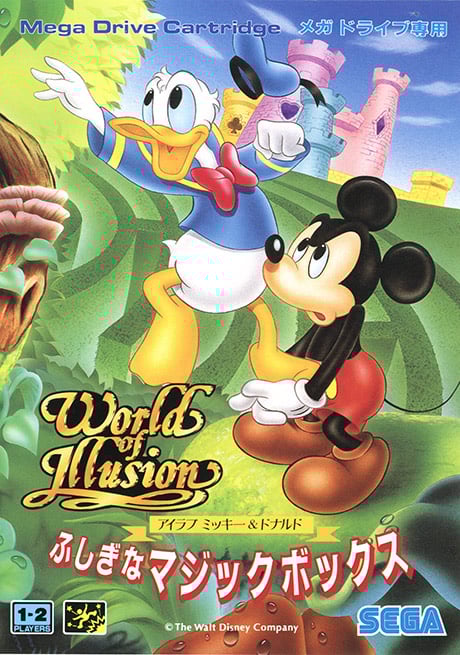
我愛米奇&唐老鴨 奇幻魔法箱
 1992-12-18
《幻想世界:米奇與唐老鴨》(Mickey Mouse and Donald Duck: World of Illusion)於1992年由SEGA日本開發,平台是Mega Drive/Genesis。它被視為SEGA迪士尼向的高峰作品之一,也是《Castle of Illusion》系列的延伸作品。若說《Castle of Illusion》專注於米奇的單人冒險,那麼《World of Illusion》便是將迪士尼經典動畫氣質與雙人合作玩法完美結合的代表,更被許多玩家稱為最溫柔、最夢幻的2D橫向卷軸遊戲之一。
故事從米奇與唐老鴨準備上台表演魔術開始。在舞台後台,兩人無意間發現一個神秘的魔法箱子。好奇的唐老鴨率先爬進箱子中,結果箱子突然啟動魔法,把米奇與唐老鴨一起吸入箱內,並將他們傳送到一個充滿魔法、森林、雲端、海底與夢境般奇景的幻想世界。為了返回現實,他們必須穿越重重關卡,擊敗守護此世界的魔法與怪物,並向大魔法師皮特(Magician Pete)挑戰。整段過程宛如一部迪士尼跨作品大合集,各地場景都能看到對《愛麗絲夢遊仙境》、《小飛象》、《石中劍》、《小美人魚》、甚至《木偶奇遇記》等經典動畫的致敬。
以輕鬆、童話與冒險色彩為主軸。故事依照通關進度展開,每當擊敗一個區域的頭目後,便會獲得一道新的魔法,這些魔法不只象徵能力提升,也賦予新的通關方式,例如:
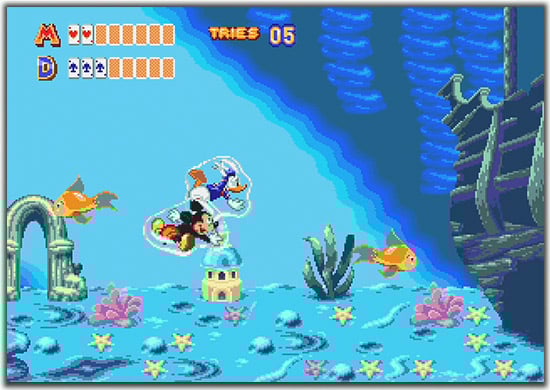
在森林關卡擊敗巨蛛之後,米奇與唐老鴨學會駕馭魔法飛毯,使他們能飛上天空,進入雲層與巨龍棲息的領域;通過海底世界後,他們可以施展氣泡魔法,在水裡呼吸並探索深海。到了後段,他們甚至能利用魔法盒瞬間移動,以及操控撲克牌士兵替自己搭橋前進,這些設定都讓整段冒險充滿奇幻特質。
頭目戰也延續迪士尼動畫風格,包含縮小版的六頭魔龍、模仿《The Worm Turns》的巨型蜘蛛、以及兇猛的鯊魚Glut。故事最終落在魔法師皮特的豪華劇院舞台,戰鬥結束後魔法世界解除,米奇與唐老鴨順利回到現實舞台,像是一場剛好上演完的舞台劇般——溫暖、完整、不帶陰霾。
維持SEGA典型的橫向卷軸設計,但動作流暢度極高,並加入許多貼近迪士尼風格的柔和動畫。主角的主要攻擊方式不是傳統武器,而是利用披風甩出的魔法粉塵,碰到敵人後便能短暫使其失去行動,並在被擊倒時化為蝴蝶、鴿子等美麗的特效,呈現出完全無暴力的表現方式。
根據玩家選擇單人或雙人遊玩,遊戲的路線與機制會出現明顯差異。若單人操作米奇或唐老鴨,關卡會依角色體型與性格調整難度。例如米奇身形較小,可以鑽過狹窄通道;唐老鴨卡得進不去,就必須繞另一條更複雜的路線。
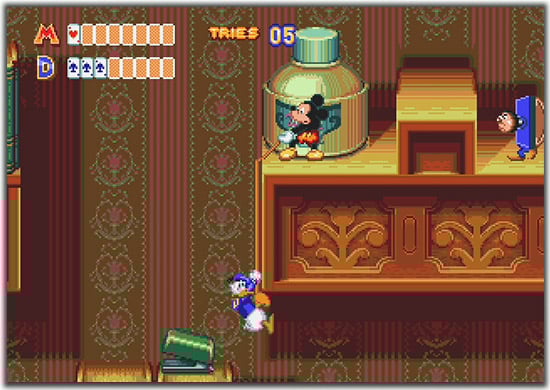
雙人遊玩時,合作系統是最被稱讚的部分。玩家需要互相抬高、拉繩、推箱子、一起搭乘魔毯,才能通過某些無法單獨完成的地形。遊戲設計刻意營造兩人互相吵鬧、互相幫忙的卡通劇動感,使其成為許多玩家童年中最強的合作遊戲記憶。
在1992年推出後就獲得大量好評,被視為Mega Drive迪士尼遊戲黃金年代的巔峰之一。其鮮豔細緻的16位元圖像、如電影般的角色動畫、柔和童話氣息的背景音樂,都被評論普遍認為是「當時SEGA主機上最具藝術感的作品之一」。多數雜誌稱讚它的操作手感、雙人合作關卡設計獨特且充滿巧思,適合大人與小孩共同體驗。
雖然遊戲難度偏低、遊戲時間不長,但卻因此成為許多家庭玩家心目中「最容易讓小孩上手的經典遊戲」。隨著時間過去,《World of Illusion》更因其溫暖不煽情的風格,被視為SEGA迪士尼系列中最具治癒氣質的作品。它的成功也影響後續包括《Kingdom Hearts》等作品的世界觀構想,許多場景能看到類似的夢境式舞台設計。如今,無論是復刻主機Mega Drive Mini或收藏家的名單上,都能看到《World of Illusion》身影。對老玩家而言,它是一段童年的魔法;對新玩家而言,它則是認識SEGA 迪士尼合作黃金期的最佳窗口。
Released in 1992 for the Sega Mega Drive/Genesis, World of Illusion is widely regarded as one of Sega’s finest Disney-licensed titles and a spiritual follow-up to Castle of Illusion. While Castle of Illusion focused on Mickey’s solo adventure, World of Illusion expanded its scope with cooperative gameplay, dual-character routes, and an atmosphere that feels like stepping directly into a dreamlike Disney film.
The story begins backstage, where Mickey and Donald are preparing a magic show for their audience. Donald, ever impatient and curious, crawls into a mysterious magic box he finds off stage. The box unexpectedly activates, pulling both Mickey and Donald inside and transporting them into a vast fantasy world filled with enchanted forests, underwater kingdoms, floating clouds, dreamscapes, and strange creatures drawn from various Disney inspirations. To return home, the duo must traverse this magical realm, overcome numerous obstacles, and eventually confront the sorcerer Pete, who governs the illusions of this strange dimension.
The adventure unfolds as a whimsical journey through several themed stages. Each level not only introduces new enemies and environments but also grants Mickey and Donald a new magic spell upon defeating the area’s boss. These spells are more than simple upgrades—they alter the way the characters progress. Learning to control a magic carpet lets them soar into the skies; mastering air-bubble magic allows them to explore deep underwater terrain; and later abilities such as teleporting between magic boxes or commanding card soldiers to build bridges contribute to the game’s charm and fantasy tone.
The game’s bosses also draw inspiration from classic Disney animation. Mickey and Donald face oversized spiders, miniature multi-headed dragons reminiscent of Madam Mim’s transformations, ferocious shark attacks, and ultimately the magician Pete himself. When the final illusion is shattered and Pete is defeated, the magical world collapses, returning the characters to the stage they originally came from—almost as if the entire ordeal was a spectacular act meant for the audience.
Gameplay and Mechanics
World of Illusion retains traditional side-scrolling action, yet the presentation sets it apart. Characters move with fluid, expressive animation that closely resembles hand-drawn Disney films. Instead of relying on physical weapons, Mickey and Donald attack using a flourish of their magician’s capes, which release sparkling dust that temporarily freezes enemies. Defeated foes transform into butterflies, doves, or playing cards, giving the game a non-violent and whimsical charm.
The game changes noticeably depending on whether the player chooses Mickey, Donald, or both. In single-player mode, each character experiences slightly different routes. Mickey’s smaller frame allows him to slip through narrow spaces, while Donald often finds the same pathways blocked, forcing him to explore an alternate—and frequently trickier—route.
In cooperative mode, the game reveals its most innovative features. Progress is often impossible without teamwork: Mickey might need to pull Donald through a gap, one character might lift the other onto their shoulders, or both might need to coordinate jumps, rope climbs, or shared rides on the magic carpet. These mechanics were widely praised at the time, becoming one of the most charming examples of cooperative platforming in the 16-bit era.
Market Reception and Legacy
At the time of release, World of Illusion was celebrated for its artistic presentation, gentle learning curve, and emotional warmth. Magazines praised its animation quality, colorful graphics, and soundtrack, often describing it as one of the most visually beautiful titles on the Mega Drive. Reviewers also highlighted its smooth controls and imaginative level design, making it especially popular among younger players and families looking for cooperative gameplay that was accessible rather than punishing.
Although some critics noted that the game’s difficulty was light and its overall length relatively short, these qualities helped cement its reputation as one of the most enjoyable, relaxing, and “magical” platformers of its time. Over the years, the game’s charm has only become more appreciated. Retro fans consider it a standout example of the Sega-Disney collaboration era, alongside titles like Castle of Illusion, QuackShot, and Donald in Maui Mallard.
Today, World of Illusion is often cited as a definitive classic of the Mega Drive library. It continues to be included in retrospectives, emulator bundles, and dedicated nostalgia conversations, maintaining a legacy of being one of the most delightful and timeless Disney video game experiences ever created.
運費計算方式:
貨款滿1000元運費外加90元
貨款1000以下:買1件運費外加 60元,買2件運費外加 70元,
買3件運費外加 80元 ,買4件運費外加 90元
貨到付款外加30元手續費
外島及大陸地區運費另計
付款方式:
線上刷卡:本站採用Paypal線上刷卡
虛擬帳號匯款:屬於您專屬的虛擬帳戶,方便站長查帳使用,本站強力推薦
實體ATM匯款:請將匯款帳號記錄下來至各大銀行ATM提款機轉帳
超商條碼繳費:請列印本站提供的條碼至四大超商繳費
線上轉帳:透過玉山銀行線上ATM轉帳(此系統只支援IE瀏覽器)
貨到付款:本站採用黑貓宅急便貨到付款
其他注意事項:
如需購買線上點數卡請直接跟站長連絡,本站不提供點數卡的線上付款