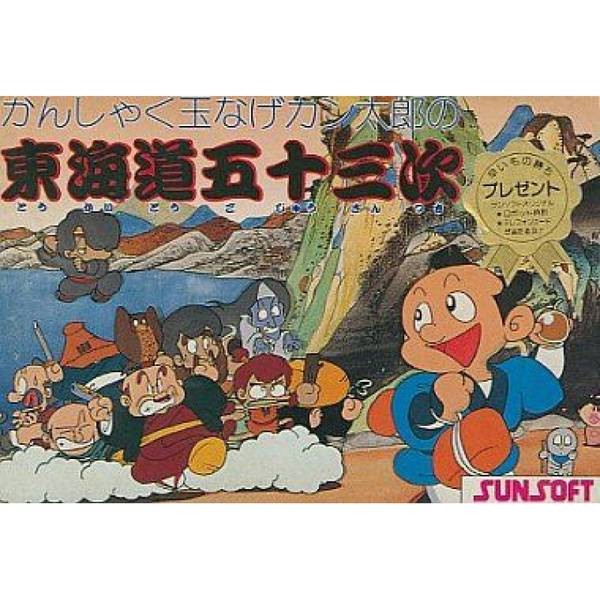
東海道五十三次
 1986-07-03
Sunsoft於1986年在任天堂紅白機(FC)推出的《東海道五十三次》(全名:かんしゃく玉なげカン太郎の東海道五十三次),是一款以江戶時代日本重要交通路線「東海道」為舞台的橫向捲軸動作遊戲。在當時多數作品偏向西方奇幻或科幻題材的環境下,本作以濃厚的和風氛圍、帶點幽默感的角色設計,以及極具挑戰性的操作手感脫穎而出,成為Sunsoft早期最具代表性的經典之一。
故事圍繞著煙火工匠勘太郎展開。他在京都完成修行後,急著返回江戶,因為未婚妻阿桃正在那裡等待。然而,一名貪婪的商人剛左衛門覬覦他所掌握的煙火技術,企圖將其轉化為軍事用途,於是派出刺客、浪人,甚至妖魔鬼怪,埋伏在通往江戶的五十三個驛站之中。勘太郎只能依靠自己製作煙火的本領,一路突破重重阻礙,橫跨整個日本,只為與心愛之人重逢。整體劇情雖然簡單,卻帶有濃厚的人情味與旅途感,呈現出一種融合冒險與思鄉的獨特氛圍。
在操作與玩法上,最大的特色來自於主角的武器——「癇癪玉」煙火彈。與當時多數遊戲採用直線射擊不同,勘太郎投擲的煙火彈具有拋物線軌跡,玩家必須精準掌握角度與距離,才能擊中不同高度的敵人。煙火彈落地後會爆炸,形成小範圍攻擊效果,甚至可以預先放置當作陷阱使用。這種帶有物理感的攻擊方式,使戰鬥更具策略性與變化性。
關卡設計同樣圍繞著這種操作特性展開。需要在古色古香的宿場町、石橋與神社鳥居之間移動,並應對地形高低差與敵人配置。勘太郎的跳躍帶有明顯慣性,使得操作需要提前預判,一旦判斷失誤,往往會被高速移動的敵人擊中或跌入陷阱。此外,途中還能取得各種強化道具,例如提升攻擊力的煙火筒或增加容錯的護身符,讓玩家在高難度環境中爭取生存空間。
在市場評價方面,長期被視為一款「難度極高但極具風格」的作品。其優點在於濃厚的文化氛圍與音樂表現,遊用紅白機音源打造出富有東洋韻味的旋律,搭配細膩的像素場景,讓玩家彷彿置身於一幅動態的浮世繪之中。能夠依序經過如三條大橋、箱根等歷史地點,也讓遊戲多了一層文化旅遊般的魅力。
然而,高難度也是本作最具爭議的部分。敵人行動迅速且出現位置難以預測,加上主角操作帶有慣性,使得玩家經常在初次遭遇時就被擊倒,形成所謂的「初見殺」。即便如此,這種嚴苛的挑戰與獨特的戰鬥設計,反而讓遊戲在核心玩家之間建立了長久的口碑。
整體而言,《東海道五十三次》是一款將日本文化背景、創意戰鬥機制與高難度挑戰融合在一起的作品。它或許不像同時期某些大作那樣普及,但憑藉其獨特魅力與鮮明風格,依然在紅白機歷史中佔據著不可忽視的一席之地。
Developed by Sunsoft and released in 1986 for the Nintendo Family Computer (Famicom), The 53 Stations of the Tōkaidō (full title: Kanshakudama Nage Kantarō no Tōkaidō Gojūsan-tsugi) is a side-scrolling action game set along the historic Tōkaidō route of Edo-period Japan. At a time when many games leaned toward Western fantasy or science fiction themes, this title stood out with its strong Japanese aesthetic, humorous character design, and highly challenging control system, making it one of Sunsoft’s most distinctive early works.
The story follows Kantarō, a skilled fireworks craftsman who has just completed his training in Kyoto and is eager to return to Edo, where his fiancée, Osen, awaits him. However, a greedy merchant named Gozaemon seeks to steal Kantarō’s advanced fireworks techniques and weaponize them for military purposes. To stop him, Gozaemon dispatches assassins, ronin, and even supernatural creatures across the fifty-three stations along the Tōkaidō. Armed only with his craftsmanship and determination, Kantarō must overcome countless obstacles and traverse the length of Japan to reunite with the one he loves. Though simple in premise, the narrative carries a strong sense of journey and emotional warmth.
The gameplay’s defining feature lies in Kantarō’s weapon: small firework bombs known as “kanshakudama.” Unlike the straightforward shooting mechanics common in many action games of the era, these projectiles follow an arcing trajectory, requiring players to carefully judge distance and angle. Upon landing, the bombs explode, dealing area damage and even functioning as traps when placed strategically. This physics-based approach adds a layer of tactical depth rarely seen in similar titles at the time.
Level design is built around these mechanics. Players navigate through traditional Japanese settings such as post towns, stone bridges, and shrine gates, all while dealing with varied terrain and enemy placements. Kantarō’s jump carries noticeable inertia, demanding precise timing and positioning; a single miscalculation can result in being struck by fast-moving enemies or falling into hazards. Along the journey, players can collect power-ups such as enhanced firework tubes for stronger attacks or protective charms that provide additional survivability.
In terms of reception, The 53 Stations of the Tōkaidō is often remembered as a game that combines extreme difficulty with strong artistic identity. Its strengths lie in its cultural atmosphere and music, with Sunsoft making excellent use of the Famicom’s sound hardware to produce melodies rich in traditional Japanese flavor. The detailed pixel environments evoke the feel of a moving ukiyo-e painting, and traveling through real historical locations like Sanjō Bridge and Hakone adds a unique sense of authenticity.
On the other hand, the game’s high difficulty has been a consistent point of criticism. Enemies move quickly and appear unpredictably, and when combined with the character’s heavy, momentum-based controls, players are frequently defeated on their first encounters. Despite this, the game’s demanding challenge and creative combat system have helped it maintain a lasting reputation among dedicated players.
Overall, The 53 Stations of the Tōkaidō stands as a distinctive title that blends Japanese cultural themes, inventive mechanics, and unforgiving gameplay. While it may not have achieved the widespread popularity of some contemporaries, its unique charm and bold design secure it a notable place in the history of Famicom games.
運費計算方式:
貨款滿1000元運費外加90元
貨款1000以下:買1件運費外加 60元,買2件運費外加 70元,
買3件運費外加 80元 ,買4件運費外加 90元
貨到付款外加30元手續費
外島及大陸地區運費另計
付款方式:
線上刷卡:本站採用Paypal線上刷卡
虛擬帳號匯款:屬於您專屬的虛擬帳戶,方便站長查帳使用,本站強力推薦
實體ATM匯款:請將匯款帳號記錄下來至各大銀行ATM提款機轉帳
超商條碼繳費:請列印本站提供的條碼至四大超商繳費
線上轉帳:透過玉山銀行線上ATM轉帳(此系統只支援IE瀏覽器)
貨到付款:本站採用黑貓宅急便貨到付款
其他注意事項:
如需購買線上點數卡請直接跟站長連絡,本站不提供點數卡的線上付款