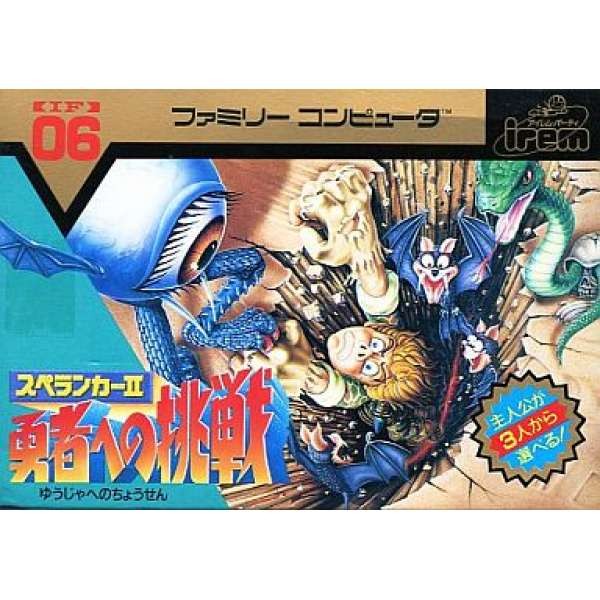
地底探險2:勇者的挑戰
 1987-09-18
於 1987 年推出的《地底探險2》,相較於前作,可以說是一次徹底顛覆性的進化。如果說初代是一款以極端操作難度聞名的動作遊戲,那麼二代則轉型為融合動作與角色扮演元素的野心之作,整體氣質與遊戲體驗都產生根本性的改變。
由 Irem 製作,將原本單一、脆弱的探險者設定,擴展為一場具有史詩規模的冒險。引入多角色職業選擇、廣大的非線性地圖,以及極具特色的「德行值(Dharma)」系統,使整體遊戲不再只是考驗操作,而是加入策略與道德判斷的層面。
在遊戲開始時,可以從三種職業中選擇角色。探險家是最接近前作主角的類型,各項能力平均,適合初次接觸的玩家。神官則擁有較高的跳躍能力與特殊的靈性互動能力,雖然攻擊距離較短,但在某些情境中具有不可取代的優勢。戰士則以強大的攻擊力與體力見長,能夠輕易破壞障礙物,但相對地移動速度較慢。這種職業分工的設計,在當時的紅白機動作遊戲中相當少見,也讓遊戲在玩法上更具變化性。
與前作單一路線向地底深入不同,採用更開放的結構。將在地表、洞穴與神殿等多個區域之間自由探索,尋找關鍵道具並解開謎題。這種非線性的設計大幅提升了遊戲的探索深度,也讓整體節奏更接近冒險遊戲而非純動作作品。
其中最具代表性的系統,莫過於「德行值」。這是一個隱藏且影響深遠的機制,在遊戲中的行為會影響數值的高低。如果隨意攻擊無辜角色或做出不當行為,德行值就會下降,而這將直接影響最終結局,甚至可能導致無法面對最終魔王,只能迎來失敗的結局。這樣的設計在 80 年代的遊戲中極為罕見,也讓玩家在遊玩過程中必須時刻注意自己的行為選擇。
在系統層面上,也對前作進行調整。雖然依然保留氧氣限制這個經典壓力來源,但新增體力值(HP),使角色不再像初代那樣「一碰即死」。然而,跌落高度與環境陷阱依舊致命,整體難度仍然偏高,只是從單純的操作考驗,轉變為操作與策略並重的挑戰。
視覺表現方面,二代相比前作更加豐富。場景設計從單調的洞穴延伸到神殿與異星風格的環境,敵人造型也更加多樣,呈現出更完整的世界觀。音樂風格則由前作的輕快旋律轉為偏向神祕與壓迫的氛圍,更加強調冒險中的孤獨與精神層面的緊張感。
在玩家評價方面,一直呈現兩極化。有些玩家認為系統過於複雜,尤其是德行值機制缺乏明確提示,使得遊戲過程容易陷入困惑,沒有攻略的情況下相當難以通關。但也有不少玩家肯定它的創新與野心,認為它成功將原本單純的動作遊戲提升為一款帶有哲學與道德思考的作品。
總體而言,《地底探險2》是一部極具實驗精神的續作。它不再只是單純考驗反應與操作,而是透過角色成長、世界探索與道德抉擇,構築出一段更為深層的冒險體驗。對於已經熟悉前作高難度節奏的玩家來說,這款作品帶來的將不只是更難,而是完全不同層次的「挑戰」。
Released in 1987, Spelunker II: Yuusha-tachi e no Chousen represents a dramatic transformation from its predecessor. While the original Spelunker was a pure test of reflexes and precision, the sequel evolved into an ambitious hybrid that blends action gameplay with RPG elements, creating a far more complex and experimental experience.
Developed by Irem, the game expands the concept of a fragile, solitary cave explorer into a broader adventure featuring multiple character classes, a sprawling world, and a mysterious morality system known as “Dharma.” This shift gives the game a more epic and philosophical tone compared to the straightforward challenge of the original.
At the start, players can choose from three distinct character types, each offering a different playstyle. The Explorer is the most balanced and closest to the original protagonist, while the Cleric trades offensive reach for superior mobility and the ability to communicate with spiritual entities. The Fighter, on the other hand, boasts high strength and durability, capable of breaking obstacles with ease, though at the cost of speed. This class-based system was highly innovative for its time, especially within the action genre.
The structure of the game also changes significantly. Instead of descending linearly into a cave, players navigate a large, interconnected world composed of surface areas, underground caverns, and ancient temples. Exploration becomes a central focus, requiring players to travel between regions, uncover hidden items, and solve progression-based puzzles in a non-linear fashion.
One of the most distinctive features is the Dharma system, which tracks the player’s moral behavior throughout the game. Actions such as harming innocent characters or making unethical choices will reduce this value, directly influencing the ending. In some cases, a low Dharma score can prevent access to the final boss entirely, leading to a bad ending. This mechanic introduces a layer of ethical consideration rarely seen in games of that era.
Although the sequel softens the extreme fragility of the original by adding a health system, danger remains ever-present. The oxygen mechanic returns, maintaining constant tension, and environmental hazards are still punishing. Players must carefully balance survival, exploration, and moral decision-making, creating a more mentally demanding experience.
Visually, the game shows clear improvement over its predecessor. Environments are more varied and detailed, featuring temples, alien-like flora, and diverse enemy designs that reflect the expanded world. The music also shifts in tone, moving away from the catchy and upbeat style of the first game toward a more atmospheric and somber soundscape, reinforcing the game’s themes of spirituality and inner struggle.
Reception among players has long been divided. Some found the added complexity—especially the obscure Dharma system—confusing and difficult to manage without guidance. Others appreciated the bold attempt to redefine the series, elevating it from a punishing action title into something closer to a philosophical adventure.
In the end, Spelunker II: Yuusha-tachi e no Chousen stands as a unique and daring sequel. It transforms the concept of survival into a journey not only of skill, but of judgment and morality. For players who mastered the relentless difficulty of the original, this sequel offers a very different kind of challenge—one that tests not just reflexes, but also patience, awareness, and the ability to navigate a world where every action carries weight.
運費計算方式:
貨款滿1000元運費外加90元
貨款1000以下:買1件運費外加 60元,買2件運費外加 70元,
買3件運費外加 80元 ,買4件運費外加 90元
貨到付款外加30元手續費
外島及大陸地區運費另計
付款方式:
線上刷卡:本站採用Paypal線上刷卡
虛擬帳號匯款:屬於您專屬的虛擬帳戶,方便站長查帳使用,本站強力推薦
實體ATM匯款:請將匯款帳號記錄下來至各大銀行ATM提款機轉帳
超商條碼繳費:請列印本站提供的條碼至四大超商繳費
線上轉帳:透過玉山銀行線上ATM轉帳(此系統只支援IE瀏覽器)
貨到付款:本站採用黑貓宅急便貨到付款
其他注意事項:
如需購買線上點數卡請直接跟站長連絡,本站不提供點數卡的線上付款
-
地底探險2:勇者的挑戰
- 定 價: 5,565円
- 售 價: 0.00
- 庫存量: 0 套
- 已賣出: 0 套
人氣指數: 0 / 6 顆星