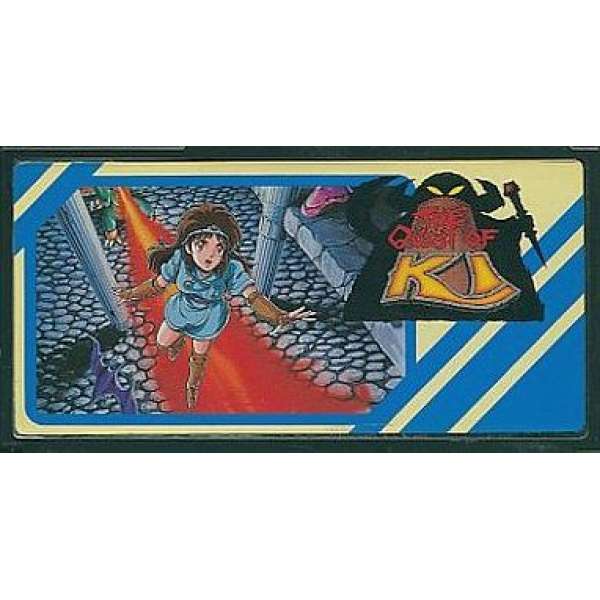
凱伊歷險記 / KI勇者 (無書盒)
 1988-07-22
對於喜愛小精靈世界與迷宮塔系列的玩家來說,由Namco於 1988 年在紅白機推出的凱伊歷險記,無疑是一款讓人又愛又恨的經典之作。同時也是《迷宮塔》的前傳,描繪女祭司凱伊在英雄吉爾登場之前,孤身挑戰巨塔、奪回藍水晶杖的冒險歷程。
在故事設定上,《凱伊歷險記》的時間點早於《迷宮塔》。當時王國的聖物「藍水晶杖」遭到惡魔德魯亞加奪走,並被藏於高塔頂端。由於塔內充滿詛咒,全副武裝的戰士無法踏入,唯有身著布衣、心靈純淨的巫女凱伊能夠進入這片禁地。故事最終銜接到《迷宮塔》的開端——凱伊雖成功登頂,卻被變成石像,這也成為英雄吉爾披上黃金鎧甲、踏入高塔展開救援的起點。
在遊戲系統方面,本作最具代表性、同時也最具爭議的,就是其獨特的操作手感。凱伊並沒有傳統的跳躍方式,按下按鍵後,她會像氣球般向上漂浮,按得越久就飛得越高。這種帶有強烈慣性與重力感的設計,使得在狹窄空間中的每一次移動都需要極高的精準度。稍有不慎,不論是撞上天花板、牆壁尖刺,或直接接觸敵人,幾乎都會立即失敗。唯一有效的攻擊方式,多半來自從高處落下、以腳踩敵,或依賴特定關卡中的道具輔助。
此外,在地面行走一段時間後會進入衝刺狀態,跳躍能力隨之提升,但同時也讓操作變得更加難以掌控,進一步放大遊戲的難度與張力。
關卡設計方面,共包含 60 個基本關卡,加上隱藏內容總計達 100 關。每一層都是獨立空間,需要在時間限制內取得鑰匙並找到出口。隨著進度推進,關卡機關也愈發刁鑽,包括會消失的平台、強風干擾、傳送門配置,以及大量來自《迷宮塔》的經典敵人,使整體體驗更具挑戰性與變化性。
在市場評價與玩家體驗上,呈現出相當兩極的反應。一方面,其創新的操作概念與細膩的物理感令人印象深刻;另一方面,過於嚴苛的判定與高難度設計,也讓不少玩家在初期便感到挫折。然而不可否認的是,在畫面與音樂表現上依然維持Namco一貫的高水準,角色動作細緻,配樂則帶有輕快卻略顯孤寂的氛圍,成功營造出獨特的冒險情境。
總體而言,《凱伊歷險記》是一款將「重力與慣性」發揮到極致的異色動作遊戲。它刻意弱化戰鬥元素,將核心樂趣集中在精準的移動與操作之上。儘管其難度常令人望而卻步,但正是這種嚴苛與獨特,使它在 1980 年代末期的紅白機遊戲史中,留下難以取代的一席之地。
For fans of PAC-LAND and The Tower of Druaga series, The Quest of Ki (カイの冒険), released by Namco on the Famicom in 1988, stands as a classic action game that players both love and hate in equal measure. Serving as a prequel to the legendary The Tower of Druaga, the game tells the story of the priestess Ki and her solitary journey to the top of a mysterious tower—before the hero Gil ever began his quest.
Set earlier in the timeline, the story revolves around the sacred Blue Crystal Rod, which has been stolen by the demon Druaga and hidden at the summit of a massive tower. Due to a powerful curse, heavily armed warriors are unable to enter, leaving only the pure-hearted and lightly dressed priestess Ki capable of venturing inside. As the story unfolds, Ki manages to reach the top, only to be turned into stone by the demon’s magic. This tragic ending directly connects to the beginning of The Tower of Druaga, where Gil, clad in golden armor, ascends the tower to rescue her.
What truly defines The Quest of Ki—and makes it so infamous—is its highly distinctive control system centered around a unique sense of buoyancy. Instead of a conventional jump, Ki floats upward like a balloon when the player presses a button. The longer the button is held, the higher she ascends. This mechanic introduces a strong sense of inertia and gravity, requiring players to carefully manage both ascent and descent within tight, confined spaces. Precision is everything, and even the smallest miscalculation can prove fatal.
Ki herself is extremely fragile. Any contact with enemies, spikes, or even the ceiling—except for landing safely on her feet—results in instant failure. The only reliable way to defeat enemies is by descending from above and stomping on them, or by making use of special items found in certain stages. Adding to the complexity, Ki can enter a sprinting state after running on the ground for a short time, which significantly increases her jumping power but also makes her movement far harder to control.
The game features a total of 60 main stages, along with hidden stages that bring the total close to 100. Each level is structured as a self-contained room where players must locate a key and reach the exit within a time limit. As players ascend the tower, the challenges become increasingly demanding, introducing disappearing platforms, strong winds, teleporters, and a variety of classic enemies familiar to fans of the Druaga universe. Each stage feels like a miniature physics puzzle, requiring both skill and careful planning to overcome.
Reception of the game has always been sharply divided. It is widely regarded as one of the most difficult action games on the Famicom. The floating movement system, while innovative, can be extremely punishing for players accustomed to precise platforming controls. The unforgiving collision detection—especially the instant death from touching the ceiling—can make early progress frustrating.
Despite this, the game’s audiovisual presentation is widely praised. As a major title from Namco, it features clean and charming visuals, with detailed character animation for Ki. The music, composed by top-tier talent, is light and melodic, yet carries an undercurrent of loneliness that perfectly complements the tone of a solitary journey.
In the end, The Quest of Ki is a truly unconventional action game that pushes the concept of “gravity” and movement to its limits. Rather than focusing on intense combat, it emphasizes graceful yet highly precise navigation. Its difficulty may drive players to the brink of frustration, but its unique mechanics and bittersweet narrative connection to The Tower of Druaga ensure its place as one of the most unforgettable and distinctive titles of the late Famicom era.
運費計算方式:
貨款滿1000元運費外加90元
貨款1000以下:買1件運費外加 60元,買2件運費外加 70元,
買3件運費外加 80元 ,買4件運費外加 90元
貨到付款外加30元手續費
外島及大陸地區運費另計
付款方式:
線上刷卡:本站採用Paypal線上刷卡
虛擬帳號匯款:屬於您專屬的虛擬帳戶,方便站長查帳使用,本站強力推薦
實體ATM匯款:請將匯款帳號記錄下來至各大銀行ATM提款機轉帳
超商條碼繳費:請列印本站提供的條碼至四大超商繳費
線上轉帳:透過玉山銀行線上ATM轉帳(此系統只支援IE瀏覽器)
貨到付款:本站採用黑貓宅急便貨到付款
其他注意事項:
如需購買線上點數卡請直接跟站長連絡,本站不提供點數卡的線上付款
-
凱伊歷險記 / KI勇者 (無書盒)
- 定 價: 4,095円
- 售 價: 250.00
- 庫存量: 0 套
- 已賣出: 0 套
人氣指數: 0.6 / 6 顆星