任天堂JUMP:最強的七人 / 英雄列傳2
 1991-12-29
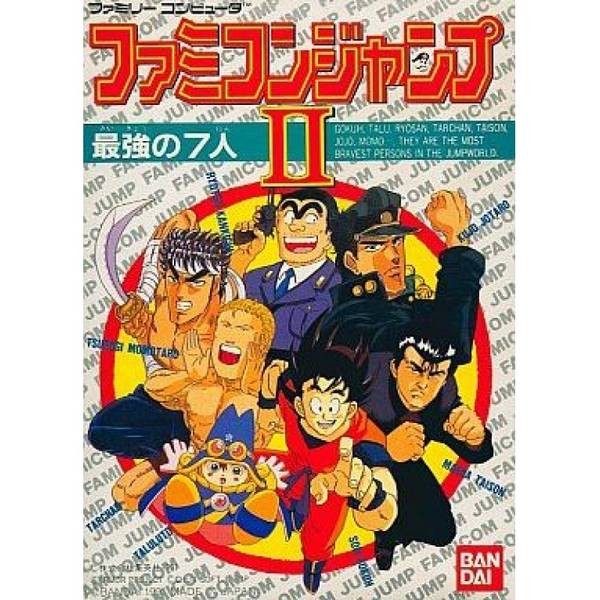
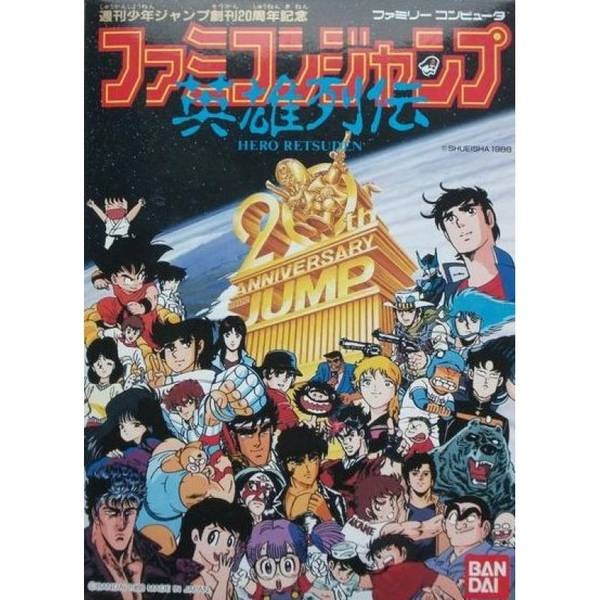
1991年12月,Bandai在任天堂 Famicom(紅白機)上推出《任天堂 JUMP II:最強的七人》(Famicom Jump II: Saikyou no 7 Nin / ファミコンジャンプII 最強の7人),作為前作《英雄列傳》的續作,也是紅白機末期最受矚目的角色扮演遊戲(RPG)之一。不同於前作試圖收錄數十部作品的廣泛策略,而是將焦點集中於當時《週刊少年 Jump》中最受歡迎的七位主角,並邀請開發《勇者鬥惡龍》系列的知名Chunsoft團隊協助製作,使遊戲系統與耐玩性達到 8 位元主機的巔峰水準
在技術表現上,完全擺脫前作的雜亂感,呈現成熟且精緻的正統RPG風格。遊戲畫面細膩,將七位風格迥異的主角——《七龍珠》的孫悟空、《魁!!男塾》的劍桃太郎、《JOJO 的奇妙冒險》的空條承太郎、《泰山阿達》的阿達、《魔法タルる特くん》的本丸、《龍之謎》的阿代(小戴)、以及《烏龍派出所》的兩津勘吉——統一呈現於精緻的Q版點陣圖中。戰鬥畫面採用半側面視角,動作流暢,必殺技效果華麗。背景音樂由Chunsoft團隊打造,旋律兼具史詩感與熱血感,使玩家在探索廣大世界時能感受到如同史詩般的冒險張力。
故事劇情描述七個原本獨立存在的漫畫世界因神祕邪惡勢力的干預而發生時空重疊,最終縫合成一個龐大的異世界。遊戲開始時,從七位英雄中選擇一位作為起點,每位角色擁有專屬的開場劇情與冒險區域。隨著故事推進,七位英雄將逐步會合,組成最強隊伍。冒險的核心是對抗由各作品經典反派組成的聯盟,需穿越風格迥異的地圖——從兩津勘吉的龜有派出所到空條承太郎的現代街道——蒐集分散於世界各處的能量來源,最終在決戰中拯救這個瀕臨崩潰的多元宇宙。
操作上,進行重大革新,將前作混亂的戰鬥系統精煉為「移動式回合制戰鬥」,戰鬥不再是固定站位,而是在縮小的戰術地圖上進行角色走位,需考慮攻擊範圍與防禦死角。例如近戰型角色劍桃太郎需衝到前線,遠程攻擊的悟空則保持距離,使操作呈現罕見的棋盤式策略感。每位英雄皆有專屬必殺技,如空條承太郎的「白金之星」連擊或阿代的「阿邦神速斬」,使用必殺技需消耗能量,需在普通攻擊與強力技能間做出抉擇。隨著隊友羈絆加深,還能觸發合體攻擊,畫面效果震撼。遊戲介面流暢,易於管理隊伍、調整裝備及使用道具,每位英雄的屬性成長與技能習得各具特色,需要玩家精密規劃資源,才能在後期面對強大Boss時立於不敗之地。
在市場上獲得高度評價,被認為是紅白機末期的RPG巔峰之作。評論家讚賞遊戲成功修正前作缺點,將七位截然不同的主角完美融合於邏輯自洽的世界觀中。雖然部分玩家對收錄作品數量減少感到遺憾,但多數人認為這種精簡反而提升遊戲深度與流暢度。市場普遍認為,本作不僅是《週刊少年 Jump》與任天堂合作的輝煌印記,也展現8位元主機在末期依然能創作出兼具現代操作邏輯與感人劇情的藝術高度。
In December 1991, Bandai released Famicom Jump II: Saikyou no 7 Nin (ファミコンジャンプII 最強の7人) on the Nintendo Famicom (NES), serving as the sequel to Famicom Jump: Hero Retsuden and becoming one of the most anticipated role-playing games (RPGs) of the Famicom’s final era. Unlike its predecessor, which attempted to include dozens of series, this installment focused on the seven most popular Weekly Shōnen Jump protagonists at the time and enlisted the renowned Chunsoft team, developers of the Dragon Quest series, to ensure top-tier system design and gameplay depth for an 8-bit console.
Technically, Saikyou no 7 Nin shed the experimental chaos of the previous game, presenting a mature and polished traditional RPG style. The graphics were detailed, unifying seven heroes from vastly different series—Goku from Dragon Ball, Momotaro Tsurugi from Sakigake!! Otokojuku, Jotaro Kujo from JoJo’s Bizarre Adventure, Ada from Tarzan, Honmaru from Magical Taluluto-kun, Aday (Little Dai) from Dragon Quest, and Kankichi Ryotsu from Kochira Katsushika-ku Kameari Kōen-mae Hashutsujo—into refined, chibi-style sprites. Combat used a semi-side view with a sense of depth, featuring smooth animation and visually striking special moves. The soundtrack, composed by Chunsoft’s team, combined epic grandeur with a passionate tone, giving players an immersive sense of adventure while exploring the vast game world.
The story revolves around seven previously separate manga worlds that have begun to overlap due to the interference of a mysterious evil force, merging into a single massive alternate universe. At the start, players choose one of the seven heroes as their protagonist, each with a unique opening storyline and adventure area. As the narrative progresses, the seven heroes converge to form the ultimate team. The core of the adventure lies in confronting an alliance of classic villains from the original series. Players traverse diverse maps—from Kankichi Ryotsu’s Kameari Police Station to Jotaro Kujo’s modern streets—collecting scattered energy sources, ultimately culminating in a final battle to save this collapsing multiverse.
Gameplay underwent a major overhaul, transforming the chaotic battle system of the previous game into a highly strategic “movement-based turn system.” Combat is fought on a mini tactical map rather than fixed positions, requiring players to consider attack range and defensive blind spots. Melee specialists like Momotaro Tsurugi must charge the frontlines, while long-range fighters such as Goku keep their distance, giving the system a rare chessboard-like tactical depth for Famicom RPGs. Each hero possesses signature special attacks—Jotaro Kujo’s “Star Platinum” barrage or Aday’s “Abon Swift Slash”—which consume energy and require players to balance between normal attacks and powerful techniques. Strengthening bonds between heroes can trigger team combination attacks with visually stunning results.
The interface supports fluid party management and growth, influenced by Dragon Quest, allowing players to easily swap party members, adjust equipment, and use items. Each hero’s stats and skill acquisition are distinct, requiring careful resource planning to overcome late-game bosses.
Famicom Jump II: Saikyou no 7 Nin received critical acclaim as a pinnacle of late-era Famicom RPGs, praised for its system optimization, nostalgia, and gameplay depth. Critics lauded the game for seamlessly integrating seven diverse protagonists into a logically coherent world. Although some fans lamented the reduction in the number of included series, most players felt that this focused approach enhanced the game’s depth and flow. Widely regarded as one of the best RPGs of the Famicom’s final years, the game stands as a shining testament to the collaboration between Weekly Shōnen Jump and Nintendo, proving that even in the console’s twilight, 8-bit hardware could deliver modern gameplay mechanics and emotionally resonant storytelling.
運費計算方式:
貨款滿1000元運費外加90元
貨款1000以下:買1件運費外加 60元,買2件運費外加 70元,
買3件運費外加 80元 ,買4件運費外加 90元
貨到付款外加30元手續費
外島及大陸地區運費另計
付款方式:
線上刷卡:本站採用Paypal線上刷卡
虛擬帳號匯款:屬於您專屬的虛擬帳戶,方便站長查帳使用,本站強力推薦
實體ATM匯款:請將匯款帳號記錄下來至各大銀行ATM提款機轉帳
超商條碼繳費:請列印本站提供的條碼至四大超商繳費
線上轉帳:透過玉山銀行線上ATM轉帳(此系統只支援IE瀏覽器)
貨到付款:本站採用黑貓宅急便貨到付款
其他注意事項:
如需購買線上點數卡請直接跟站長連絡,本站不提供點數卡的線上付款
-
任天堂JUMP:最強的七人 / 英雄列傳2
- 定 價: 8,925円
- 售 價: 550.00
- 庫存量: 1 套
- 已賣出: 0 套
人氣指數: 0.5 / 6 顆星